Distance. Roughly 1,100 to 1,500 miles depending on the metros — New York City to Jacksonville at the short end, upstate New York to Miami at the long end.
Typical transit. Generally three to six days once the vehicle is collected, plus the pickup window on the front. Transit estimates are guidelines, not guarantees: federal hours-of-service limits, weather and routing all affect them.
If there is a single defining lane in American auto transport, this is it. Every autumn, an enormous number of vehicles move down the Atlantic seaboard from the Northeast to Florida, and every spring they come back. Carriers structure their entire year around it.
That produces two things at once. Availability on this corridor is the best in the country — there are always trucks running it. And the seasonal price swing is the largest of any lane, entirely predictable, and therefore entirely plannable. The people who book six weeks out and the people who call the week of Thanksgiving are pricing very different markets.
The snowbird calendar on this lane
More than any other route, timing is the decision here:
- Late October to mid-December is the peak. This is the heaviest southbound stretch of the year and rates reflect it. Book four to six weeks ahead.
- January and February are moderate, with steady demand and good availability.
- Spring and summer are the value window southbound, because the traffic is all heading north.
- Shifting two or three weeks either side of the peak puts you on the same corridor in the same truck for meaningfully less.
- Book both legs at once if you make the trip annually. It is the single most effective thing a returning snowbird can do. See snowbird and seasonal car shipping.
- Thanksgiving week specifically is the tightest capacity of the year on this lane. Book around it, not into it.
The route your vehicle takes
One dominant corridor, and it is the busiest vehicle lane on the East Coast:
- I-95 south from the New York metro through New Jersey, Delaware, Maryland, Virginia, the Carolinas and Georgia into Jacksonville.
- I-95 continues down the Atlantic coast to Daytona, West Palm Beach, Fort Lauderdale and Miami.
- I-75 instead for Gulf-side destinations — Tampa, Naples, Fort Myers — leaving I-95 in Georgia.
- I-87 south first for upstate New York pickups, adding a few hundred miles at the front.
- I-4 across the middle for Orlando and the interior.
- Because the peninsula is long, Miami is several hundred miles further than Jacksonville. Give us the actual destination city.
Pickup in New York
The hardest part of this lane is the first mile, not the other 1,200:
- Manhattan pickup at the address is rarely possible. Expect a meeting point, commonly in New Jersey, Queens or the Bronx.
- Brooklyn and Queens vary street by street. Tell us your exact address at quote stage rather than just the borough.
- Long Island is straightforward in the suburbs, though the parkway network is closed to commercial vehicles.
- Upstate New York is ordinary suburban loading — except in winter, when an unploughed driveway or side street will stop a pickup regardless of street width.
- Winter pickups in the Northeast need a wider window. Snow delays are ordinary from November through March.
- Driving the vehicle to a suburban meeting point yourself frequently reduces both the price and the difficulty. See New York car shipping.
Delivery in Florida
The other end has its own constraint, and it is the one most people have not thought about:
- Most gated and 55-plus communities prohibit commercial carriers or have height barriers at the entrance.
- Coastal condominium and high-rise addresses in Miami, Fort Lauderdale and Palm Beach usually have nowhere legal to stop a carrier.
- Check your community's delivery rules, gate registration and permitted hours before you book, and tell us what you find.
- If you are flying down separately, allow buffer days and name a local contact over 18 who can inspect and sign.
- A vehicle arriving before you do needs somewhere legal to sit. Plan that in advance.
What ships on this lane
Overwhelmingly seasonal, with a few specifics worth knowing:
- Ordinary daily drivers, which are the large majority and ship on open carriers.
- Vehicles that have sat through a northern winter or a Florida summer, of which a share will not start. Check the battery before pickup.
- Second vehicles for seasonal homes, often making the same trip every year.
- Collector cars heading to the winter Florida show and auction season, usually enclosed.
- RVs and boats on the same seasonal cycle. See RV transport.
Questions about this route
How long does New York to Florida take?
Generally three to six days once the vehicle is collected, plus the pickup window on the front. It is a comparatively short lane by transport standards, and I-95 is the busiest vehicle corridor on the East Coast, so both availability and transit are reliable outside severe weather.
When should I book for the winter season?
Four to six weeks ahead for a southbound move between late October and mid-December. That is the heaviest stretch of the year on this corridor and the single most predictable price rise in the industry. Thanksgiving week specifically is the tightest capacity of the year — book around it rather than into it.
Can I save money by shipping at a different time?
Yes, and this is the lane where it matters most. Moving two or three weeks either side of the autumn peak puts you on the same corridor in the same truck for meaningfully less. Spring and summer southbound are the cheapest, because the seasonal traffic is all heading the other way.
Where will the truck collect from in New York City?
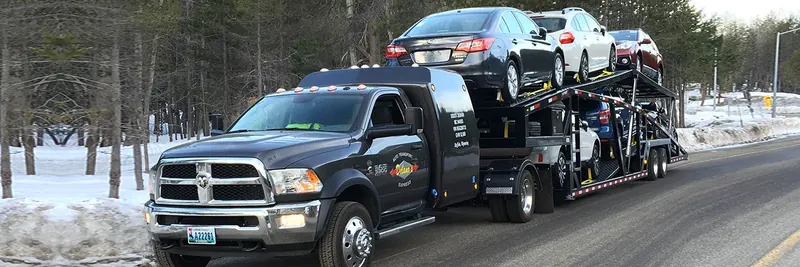
Usually a meeting point rather than your address. Manhattan has almost nowhere a 75-foot carrier can legally stop, and the parkways in are closed to commercial vehicles. New Jersey, Queens or the Bronx are the common meeting locations, agreed with you by phone in advance.
Can you deliver inside my Florida community?
Usually to a nearby lot instead. Most gated and 55-plus communities prohibit commercial carriers or have height barriers, and coastal condominium addresses rarely have anywhere legal to stop a rig. Check your community's rules before booking and tell us what they require.
Both ends of this lane
New York car shipping
Corridors, access, seasonal pricing and what ships there.
Florida car shipping
Corridors, access, seasonal pricing and what ships there.
Related routes
Services on this route
Snowbird and seasonal car shipping
Open car transport
Door-to-door car shipping
Enclosed car transport
Planning this move
How long does car shipping take?
Pickup usually happens within a window of a few days of your first available date, often sooner on busy lanes.
How to prepare your car for transport
Wash the car and photograph every side, the roof and the wheels, with the date visible.
What's included in a car shipping quote?
A useful quote states the price, the route, the vehicle, open or enclosed, and the pickup window it assumes.
Ready when you are
We price this lane, not a national average.
Send the two ZIP codes and the vehicle for a written quote. Nothing is charged until a driver is booked.