Home / Insurance and claims
Insurance and claims
Whose policy covers your vehicle, what it excludes, and why five minutes at delivery matters more than anything else you will read here.
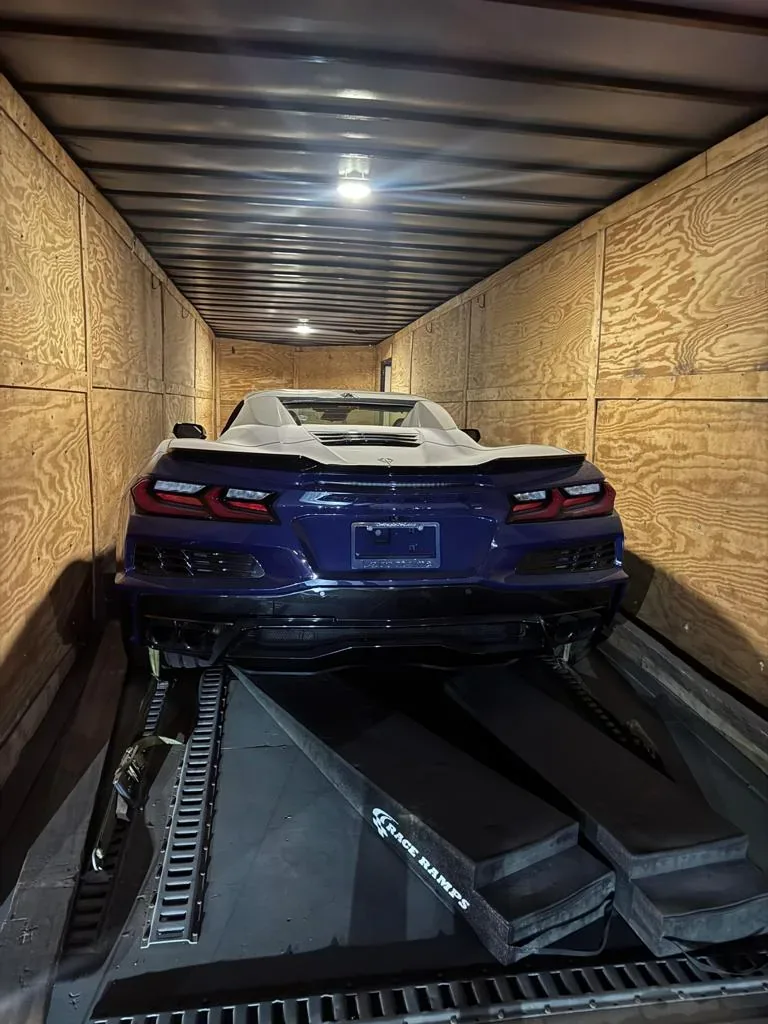
Every auto transport company says your vehicle is insured. Far fewer explain whose policy it is, what it covers, what it excludes and what you personally have to do for it to pay out. Those details are the difference between a claim that works and one that does not.
Whose insurance covers your vehicle
The motor carrier's cargo insurance covers your vehicle while it is on their truck. Not ours. Vector is a broker: we arrange the transport and verify the coverage, but the policy that pays a cargo claim belongs to the carrier who physically carries your vehicle.
This is how the industry is structured and it is worth understanding rather than glossing over, because it tells you what actually protects you: the carrier's limit, verified before dispatch, and confirmed to you in writing.
Typical limits, and when they are not enough
Carriers we dispatch typically hold cargo coverage between $100,000 and $250,000. For most vehicles that is comfortably sufficient. There are two situations where it is not, and both are on you to raise before the vehicle moves:
- High-value vehicles. If your car is worth more than the carrier's limit, tell us the value at quote stage. We place those loads with carriers holding higher limits and send you the certificate before dispatch. See luxury and exotic transport.
- Per-load versus per-vehicle limits. This is the detail most people never think to ask about. A $250,000 limit shared across nine vehicles on one trailer is not the same protection as $250,000 on yours alone. Ask which it is; we will tell you.
For a classic or antique with no book value, have a current agreed-value or appraised figure before it ships. Establishing what a vehicle was worth after something happens to it is a much harder conversation than establishing it beforehand.
What cargo insurance covers
- Damage to the vehicle caused during loading, transit or unloading.
- Loss of the vehicle in transit.
- Damage arising from how the vehicle was secured or handled by the carrier.
What it does not cover
These exclusions are standard across the industry, not particular to us:
- Personal items left in the vehicle. The roughly 100 lb trunk allowance some carriers accept is a courtesy, not insured cargo. Do not ship anything in the car you would mind losing.
- Pre-existing damage, which is exactly why the condition report at pickup matters so much.
- Mechanical failure not caused by the carrier, including a battery that dies over several days in transit.
- Acts of God in many policies, including hail, flood and storm damage. If your route crosses hail season and the paint is irreplaceable, that is an argument for enclosed transport rather than for a better claim.
- Normal road grime and brake dust on an open carrier. The vehicle will arrive dirty; that is not damage.
- Damage from undisclosed vehicle conditions, such as a modification or a non-running state you did not declare.
The Bill of Lading is the claim
Almost every cargo claim that fails, fails on documentation rather than on the merits. The Bill of Lading signed at pickup and delivery is the controlling record of your vehicle's condition, and a signed clean Bill of Lading at delivery is a formal statement that the vehicle arrived undamaged. Reopening that afterwards is very difficult.
So the five minutes at delivery matter more than anything else on this page:
- Inspect before you sign, not after. Once you sign, your position is much weaker.
- Inspect in daylight where you possibly can.
- Walk all four sides, then the roof and the wheels. The roof is the panel nobody checks.
- Compare against your own dated pickup photographs.
- Write any damage on the Bill of Lading before the driver leaves, however minor it looks, and photograph both the damage and the annotated document.
- Call us while the driver is still there if anything is wrong.
How a claim works
- Note the damage on the Bill of Lading at delivery and photograph it. This is the step that cannot be done later.
- Tell us immediately, ideally while the driver is present.
- We open the claim with the carrier's insurer and give you the policy and contact details.
- You submit documentation: the annotated Bill of Lading, pickup and delivery photographs, and a repair estimate.
- The insurer assesses and responds. Timelines are set by the insurer, not by us, and cargo claims commonly take several weeks.
- We stay involved throughout. Handing you a phone number and disappearing is not the arrangement.
Your own policy
Your personal auto policy usually remains in force during transport as secondary coverage, behind the carrier's cargo policy. Usually is not always, and your insurer will confirm your position in one phone call — worth making before the vehicle moves, particularly on an agreed-value classic or collector policy.
Common questions
Is my car insured during transport?
Yes, by the assigned motor carrier's cargo insurance, which we verify as active before the load is dispatched and confirm to you in writing. Typical limits run from $100,000 to $250,000, and higher-limit carriers are available for high-value vehicles. The policy belongs to the carrier, not to Vector.
Is the limit per vehicle or for the whole load?
It varies by policy, and it is the question most people never think to ask. A limit shared across nine vehicles on a trailer is very different protection from the same figure applied to yours alone. Ask us and we will tell you which applies to your carrier before dispatch.
Are my personal belongings covered?
No. Items left in the vehicle are not covered by the carrier's cargo insurance, whatever the carrier agrees to carry as a courtesy. Weight above roughly 100 lb can also attract a fee or a refusal at pickup. Do not ship anything in the car you would mind losing.
What do I do if my car arrives damaged?
Write it on the Bill of Lading before the driver leaves, photograph both the damage and the annotated document, and call us while the driver is still there. That sequence is what makes a claim work. A signed clean Bill of Lading is very hard to reopen, so inspect properly before you sign anything.
How long does a claim take?
Cargo claims commonly take several weeks, and the timeline is set by the carrier's insurer rather than by us. We open the claim, give you the policy details, help assemble the documentation and stay involved until it is resolved.
Does my own insurance still apply?
Usually, as secondary coverage behind the carrier's cargo policy — but confirm it with your insurer before the vehicle moves rather than after. This matters most on agreed-value classic and collector policies, where the terms around transport vary.
Ready when you are
Two ZIP codes is all it takes to start.
Send the route and we will come back with a realistic quote. No upfront payment.