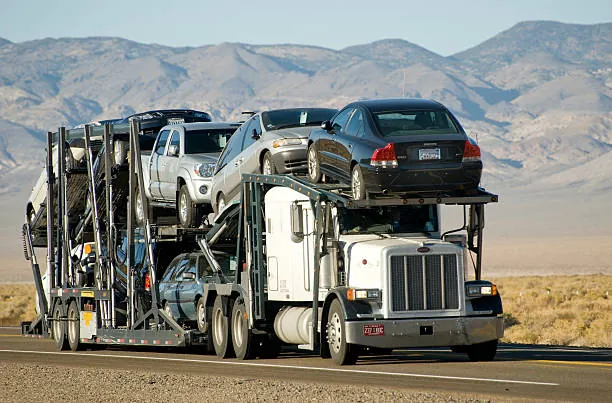
California is the single highest-volume state in American auto transport, and that shapes everything about shipping a car here. Carrier availability is excellent, lanes out of the major metros run daily, and a load that would sit for a week in a thinly served state often dispatches within 48 hours. The trade-off is that California's geography and its cities create more access problems than almost anywhere else.
The practical result is that a California quote is driven less by finding a truck and more by two things: which direction you are going, and whether the truck can physically reach the address at either end.
The corridors that serve California
Four interstates carry almost all vehicle freight in and out of the state, and which one your move uses affects both price and transit:
- I-5 runs the length of the state, San Diego to the Oregon border. The north–south spine, and the busiest vehicle corridor on the West Coast.
- I-10 heads east from Los Angeles through Phoenix, Tucson, El Paso and on to Texas and the Southeast. The main southern transcontinental route and the usual path for California-to-Florida and California-to-Texas moves.
- I-40 leaves from Barstow across Arizona, New Mexico and into Tennessee. The middle route, and often the one chosen over I-10 in summer or I-80 in winter.
- I-80 runs from the Bay Area across the Sierra Nevada through Reno, Salt Lake City and on to Chicago. The northern transcontinental route, and the one affected by Donner Pass conditions from roughly November through March.
- US-101 serves the coastal metros but is not a primary freight corridor for car carriers; loads generally route inland to I-5.
Directional pricing, and why it matters here more than anywhere
California is the clearest example in the country of a lane costing different amounts in each direction. Carriers reposition constantly, and an empty truck is a truck losing money:
- Rates on a lane reflect how many trucks are already going that way with space, which is why the same route can differ noticeably between outbound and inbound.
- The pattern shifts with the season. Snowbird traffic, summer relocations and the auction calendar all pull capacity in one direction for weeks at a time.
- Because the state is so well served, flexibility pays unusually well here. A three-day pickup window rather than a fixed date widens the carrier pool considerably.
- Ask us to quote both directions if you have a choice about when you move. On a California lane the difference is often worth planning around.
Access: the part that surprises people
A loaded car carrier is around 75 feet long and cannot reverse out of a mistake. California's metros present this problem more than most, and knowing which applies to you is worth mentioning at quote stage:
- San Francisco is the hardest major pickup in the state: steep grades, narrow streets, few places to stop a rig legally, and almost no residential street that works. Meeting points are the norm rather than the exception.
- Los Angeles hillside neighborhoods — the canyons, the Hollywood Hills, Palos Verdes — combine narrow switchbacks with low branches and no turning room.
- Dense urban Los Angeles and San Diego have street-parking density that leaves no legal place to load, even where the street itself is wide enough.
- Gated communities, common across Orange County, the Inland Empire and the Coachella Valley, frequently prohibit commercial vehicles or have height barriers at the gate.
- Rural Central Valley and mountain addresses are usually easy for the truck but can be off the main corridor, which affects how quickly a load assigns.
- In every case the driver proposes a nearby retail or commercial lot, agreed with you by phone in advance. See door-to-door car shipping.
Seasonal and environmental factors
California's calendar affects transport in ways that are specific to the state:
- Winter passes. Donner Pass on I-80 and the Grapevine on I-5 both close or restrict in winter storms. A closure adds a day or reroutes a load several hundred miles.
- Wildfire season, broadly summer into fall, closes highways at short notice and can delay loads already in transit. It is a real routing factor, not a disclaimer.
- Summer desert heat on I-10 and I-40 affects scheduling, and is worth knowing about for vehicles with cooling or battery sensitivities.
- The auction and show calendar, particularly around Monterey in August, tightens enclosed capacity in and out of the state for weeks. Book enclosed transport well ahead around those dates.
- Snowbird season pulls capacity toward Arizona and Florida from October, which affects what is available on California lanes.
What ships on California lanes
The vehicle mix here is unlike anywhere else, and it changes which service is right:
- A high share of exotic, luxury and collector cars, particularly around Los Angeles, Orange County and the Bay Area. See luxury and exotic transport.
- Lowered and modified vehicles at a rate you do not see elsewhere. Ground clearance below roughly four inches needs a lift gate, so measure it as the car sits.
- Electric vehicles in large numbers. They ship normally, but they are heavier than their size suggests and weight is priced, so give us the exact model.
- Project cars and non-runners from the state's restoration and parts trade. See inoperable vehicle transport.
- Ordinary daily drivers, which are the large majority and ship perfectly well on open transport.
California metros we ship to and from
We collect and deliver anywhere in California, not only in these metros. This is what is worth knowing about the busiest ones:
- Los Angeles. The largest single origin and destination in the state. Excellent carrier availability, but hillside and dense urban addresses usually need a meeting point.
- San Diego. Well served via I-5. Straightforward outside the dense coastal neighborhoods and the gated communities inland.
- San Francisco and the Bay Area. The hardest access in California. Expect a meeting point in the city itself; Oakland, the Peninsula and the East Bay suburbs are considerably easier.
- Sacramento. Sits on both I-5 and I-80, which makes it one of the easier major pickups in the state and a common consolidation point.
- San Jose. Good availability on I-880 and US-101 corridors, with typical suburban access outside the dense downtown core.
- Fresno and Bakersfield. Directly on I-5 and SR-99. Usually easy loading and reliable availability on north–south lanes.
- Riverside and San Bernardino. The Inland Empire is a major freight hub with excellent access, though gated communities are common.
- Palm Springs and the Coachella Valley. Strong seasonal pattern, with snowbird traffic in and out. Gated communities are the rule rather than the exception.
Questions about California car shipping
How much does it cost to ship a car to or from California?
It depends on the lane, the direction, the vehicle and your dates, and any figure quoted without those is a guess. What is specific to California is that direction matters more here than almost anywhere: the same route can price differently outbound and inbound depending on how carriers are repositioning that week. Send two ZIP codes and the vehicle and we will quote the actual lane.
How long does it take to ship a car from California to the East Coast?
Coast to coast is generally seven to ten days once the vehicle is collected, subject to federal hours-of-service limits, weather and routing. Add the pickup window on the front of that. In winter, a storm on I-80 over Donner Pass or a closure on I-70 can add a day or push the load onto a longer route.
Can a carrier pick up in San Francisco?
The truck will collect near you rather than outside your door in most of the city. San Francisco's grades, street widths and parking density leave very few places a 75-foot carrier can legally stop. The driver arranges a nearby lot and agrees it with you in advance — this is normal here, not a problem with your booking.
Do I need enclosed transport in California?
Only for the same narrow set of vehicles as anywhere: exotics, classics, fresh paint and cars below about four inches of clearance. California ships more of those than any other state, so enclosed capacity is comparatively good here — but around the August Monterey week it tightens sharply and needs booking well ahead.
Does wildfire season affect my shipment?
It can. Highway closures at short notice are a genuine routing factor from summer into fall, and a load already in transit may be rerouted or delayed a day. It is not a reason to postpone a move, but it is a reason to build a little buffer into a fixed arrival date.
Popular California routes
Lane-specific detail on distance, transit, seasonal demand and pricing for the routes people ask about most:
California to Florida
California to New York
California to Texas
Texas to California
Florida to California
Arizona to California
Services on California lanes
States connected to California
Arizona car shipping
Next door on I-10 and I-8; one of the shortest interstate lanes in the West.
Washington car shipping
The far end of the I-5 corridor up the West Coast.
Planning a California move
How much does it cost to ship a car?
The price is set by the lane, not by miles alone: distance, direction, season and how many trucks are already going your way.
How long does car shipping take?
Pickup usually happens within a window of a few days of your first available date, often sooner on busy lanes.
Shipping somewhere else? See all states we cover, or popular routes.
Ready when you are
Send the route and we will price the actual lane.
A written quote, a vetted carrier and confirmed insurance. Nothing is charged until a driver is booked.