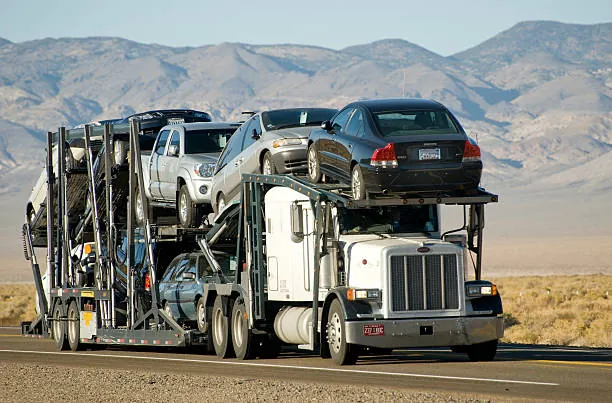
Distance. Roughly 1,200 to 1,900 miles depending on the metros — El Paso to Los Angeles at the short end, Houston to the Bay Area at the long end.
Typical transit. Generally three to six days once the vehicle is collected, plus the pickup window on the front. Transit estimates are guidelines, not guarantees: federal hours-of-service limits, weather and routing all affect them.
This is one of the more straightforward long lanes in the country. Both endpoints are among the busiest freight markets in America, the corridor between them runs through the desert Southwest with no passes that close, and trucks move in both directions constantly. Loads generally assign quickly and transit is predictable year-round.
The thing that most often changes a quote on this lane is not the route. It is what is being shipped. Texas has the highest concentration of full-size pickups, large SUVs and lifted trucks in the country, and those are priced on size and weight rather than on the badge.
The route your vehicle takes
Two southern corridors, chosen by where in Texas the vehicle starts:
- I-10 west from Houston or San Antonio through El Paso, Tucson and Phoenix into the Los Angeles basin. The main route.
- I-20 west then I-10 from Dallas–Fort Worth, joining the main corridor in West Texas.
- I-40 west from the Texas Panhandle through New Mexico and Arizona to Barstow, then south or west.
- I-5 north at the end for deliveries above Los Angeles — the Bay Area, Sacramento or the Central Valley.
- No mountain passes that close. This is a year-round reliable corridor, which is its main advantage over northern transcontinental routes.
Vehicle size, and why it matters here
The most common source of a surprise on this lane:
- Full-size pickups and large SUVs take considerably more deck space and weight allowance than a sedan, and are priced accordingly.
- Lifted trucks change the height and the fit on a trailer, and may limit which carriers can take them. Give us the measured height, not the trim level.
- Oversize tires affect both width and how the vehicle sits in a rack.
- Dually pickups are wider than standard and need a carrier that can accommodate them.
- Aftermarket bumpers, racks, light bars and toolboxes all add dimensions. Mention them at quote stage rather than at the curb.
- Being precise about the vehicle is what keeps the quote honest on this lane. An undisclosed lift is a refused load.
Timing and seasonal factors
Less seasonal than the Florida lanes, with a few real considerations:
- Summer, May through August, is peak relocation season, and lead times lengthen on both ends of this lane.
- Desert heat on I-10 from June through September affects driver scheduling, particularly through Arizona and West Texas.
- Monsoon storms in Arizona and New Mexico, roughly July through September, can close highways at short notice.
- Winter is generally the easiest time on this corridor, because unlike northern routes there is no pass risk.
- Gulf hurricane season, June through November, can affect a Houston pickup though not the route west.
- Directional pricing applies. Ask us about the reverse direction if your dates are flexible.
Access at each end
Easy at one end, variable at the other:
- Texas pickup is usually straightforward. Suburban Texas has some of the easiest loading in the country: wide streets, room to turn, legal parking.
- Downtown Austin and central Houston are the exceptions, with limited legal stopping.
- Gated communities are common across the suburban Metroplex and around Houston and often prohibit commercial vehicles.
- California delivery is the harder end: hillside Los Angeles, dense urban streets and San Francisco's grades frequently need a meeting point.
- See door-to-door car shipping for how meeting points are agreed in advance.
What ships on this lane
The mix is distinctive at the Texas end:
- Full-size trucks and SUVs in high proportion, which is the defining feature of Texas freight.
- Relocations between two of the fastest-moving population centers in the country, which is the bulk of the volume.
- Heavy equipment and agricultural machinery. See heavy equipment transport.
- Dealer and auction vehicles between two very active markets. See dealer and auction transport.
- Military moves, given the installations at both ends. See military PCS car shipping.
Questions about this route
How long does Texas to California take?
Generally three to six days once the vehicle is collected, plus the pickup window on the front. It is a shorter lane than the coast-to-coast routes and runs through the desert Southwest with no passes that close, so transit is predictable year-round.
I have a lifted truck. Will that cost more?
Yes, and it is worth being precise about. Lift height, oversize tires, dually axles, aftermarket bumpers and racks all change the vehicle's dimensions and which carriers can take it. Give us the measured height and width rather than the model and trim, and the quote will hold.
Is winter a problem on this route?
No, and that is one of its advantages. The southern corridor has no mountain passes that close, so this lane runs reliably through winter when northern transcontinental routes are exposed to pass closures and plains blizzards. Summer heat and monsoon storms in Arizona are the more relevant seasonal factors here.
Which Texas metros are quickest to collect from?
Dallas–Fort Worth and Houston, both of which are among the fastest metros in the country to dispatch a load — 24 to 48 hours is often achievable. San Antonio and Austin are close behind. El Paso, the Panhandle and the Rio Grande Valley sit further off the main corridors and take longer to assign.
Is the reverse direction cheaper?
Sometimes, depending on how carriers are repositioning that week. The two directions of this lane rarely cost the same, so if your dates have any flexibility it is worth asking us to price both. See California to Texas.
Both ends of this lane
Texas car shipping
Corridors, access, seasonal pricing and what ships there.
California car shipping
Corridors, access, seasonal pricing and what ships there.
Related routes
Services on this route
Planning this move
How long does car shipping take?
Pickup usually happens within a window of a few days of your first available date, often sooner on busy lanes.
How to prepare your car for transport
Wash the car and photograph every side, the roof and the wheels, with the date visible.
What's included in a car shipping quote?
A useful quote states the price, the route, the vehicle, open or enclosed, and the pickup window it assumes.
Ready when you are
We price this lane, not a national average.
Send the two ZIP codes and the vehicle for a written quote. Nothing is charged until a driver is booked.