The short answer
- Pickup usually happens within a window of a few days of your first available date, often sooner on busy lanes.
- As a working guide, transit is one to three days under 500 miles, three to five days for 500 to 1,500 miles, and seven to ten days coast to coast.
- These are estimates, not guarantees. Federal driving limits, weather and routing all move them.
- If a date truly cannot move, expedited service buys a guaranteed pickup window.
Clock one: the pickup window
Car carriers build routes by filling a truck along a corridor, so they commit to a window rather than a fixed hour. On a busy lane with a few days of flexibility, a load often assigns within a day or two. On a thin rural lane, at a seasonal peak, or with a single fixed date, it takes longer.
The pickup window is the part you can influence. Booking a week or two ahead, and offering a few days of flexibility, shortens it more than anything else.
Clock two: transit time
Once the vehicle is on the truck, distance is the main driver. As a working guide:
| Distance | Typical transit |
|---|---|
| Under 500 miles | 1 to 3 days |
| 500 to 1,500 miles | 3 to 5 days |
| Coast to coast, around 2,500 to 3,000 miles | 7 to 10 days |
Why it takes longer than driving it yourself
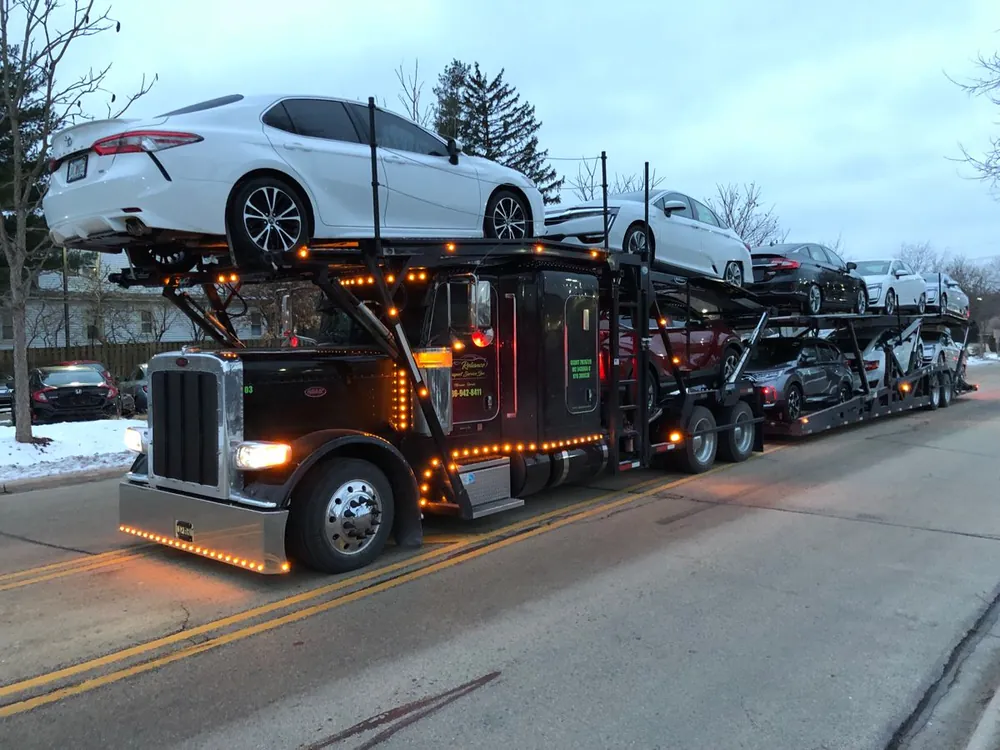
Two reasons. First, the driver is not only carrying your car. A truck with eight or nine vehicles makes several stops, and yours may not be first on or first off.
Second, commercial drivers work under federal hours-of-service rules. A property-carrying driver may drive at most 11 hours after 10 consecutive hours off duty, within a 14-hour on-duty window, and must take a 30-minute break after 8 hours of driving. The rules are set by the Federal Motor Carrier Safety Administration, and they exist to keep tired drivers off the road. They are also why a coast-to-coast run takes about a week rather than four days.
What can slow a shipment down
- Weather. Mountain pass closures on I-80 and I-70 in winter, lake-effect snow, hurricanes on the Gulf and Atlantic coasts, and desert monsoon storms.
- Seasonal peaks. Snowbird season, August college move-in and summer relocations fill trucks on particular lanes.
- Oversize loads. RVs, boats and equipment over legal width often travel in daylight only and may be restricted at weekends.
- Access. A street a carrier cannot enter means arranging a meeting point, which is quick when agreed in advance and slow when discovered on the day.
- An unanswered phone. The single most common cause of a missed pickup is a call-ahead nobody picks up.
How to plan around it
- Treat the delivery date as a window, not an appointment, and build in a buffer day or two if something depends on it.
- Book earlier than you think you need to in a peak season.
- Give the carrier a phone number that will be answered, and name a backup contact.
- If the date is fixed, compare standard and expedited car shipping. Expedited guarantees the pickup window; transit still depends on the road.
Common questions
Can you guarantee a delivery date?
No, and a company that promises one is promising something it cannot control. Federal hours-of-service limits, weather and routing all affect transit. What expedited service can guarantee is the pickup window.
Will I know where my car is during transit?
You get the driver's contact details at dispatch, and your agent can reach the driver directly. Not every carrier offers live GPS tracking, so we do not promise a map. You do get a call-ahead before pickup and before delivery.
How far ahead should I book?
One to two weeks is comfortable on most lanes. In a seasonal peak, four to six weeks. Short notice is often possible on busy corridors, but it narrows the choice of carriers.