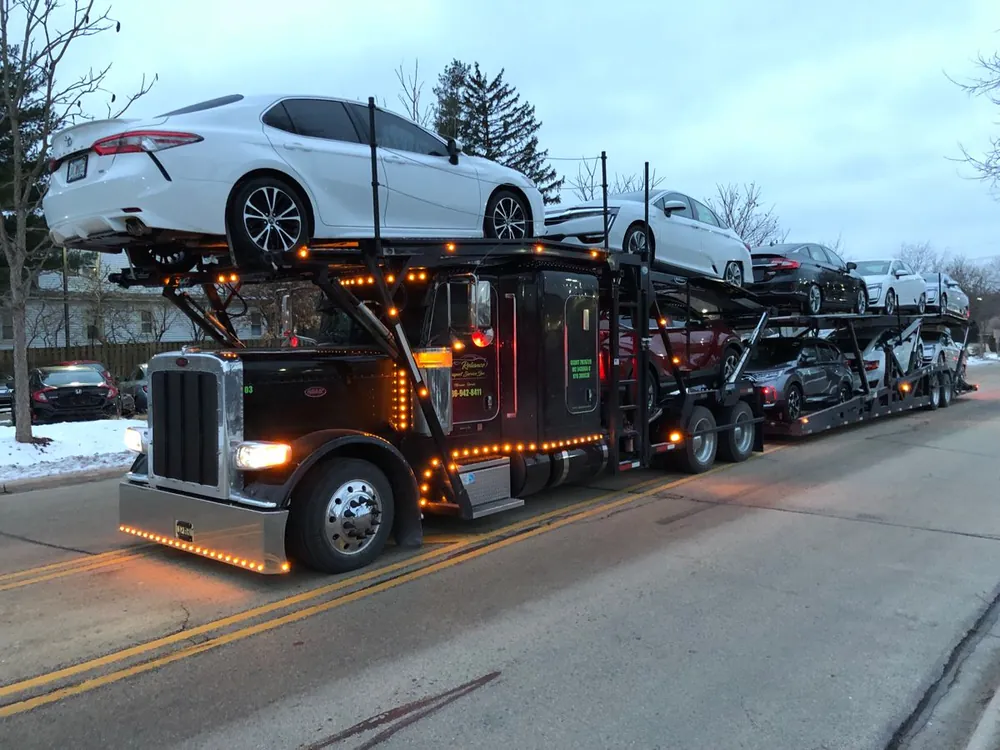
The first thing to know about shipping a car in Texas is scale. El Paso to Beaumont is further than New York to Chicago. A move within the state is frequently a genuine long-haul job, and treating "Texas to Texas" as a short local trip is how people end up surprised by a quote.
The second is that Texas is one of the best-served freight markets in the country. Three major interstates cross it, the Houston–Dallas–San Antonio–Austin triangle generates constant truck movement, and vehicles are moving in and out at volume year-round. Availability is generally good; the variables that move your price are distance, the vehicle and your dates.
The corridors that serve Texas
Texas sits at the crossing point of the southern transcontinental routes, which is why so much national freight passes through it:
- I-10 runs west to east across the whole state, El Paso through San Antonio and Houston toward Louisiana and eventually Florida. The main southern transcontinental corridor.
- I-35 runs north–south from Laredo through San Antonio, Austin and Dallas–Fort Worth toward Oklahoma City and the Midwest. The busiest internal corridor in the state.
- I-20 crosses from West Texas through Dallas–Fort Worth toward Louisiana and the Southeast, and is the usual route for Texas–Atlanta and Texas–Carolinas moves.
- I-45 connects Dallas and Houston, the state's densest internal vehicle lane.
- I-27 and US-287 serve the Panhandle, which is comparatively thinly covered and where loads take longer to assign.
In-state distances, and why they cost what they do
The single most common misunderstanding on Texas quotes:
- El Paso to Houston is roughly 750 miles — a longer haul than many interstate moves people expect to pay less for.
- Dallas to Houston is around 240 miles, which is short enough that the cost is dominated by the driver's time rather than by mileage.
- Short in-state moves often price higher per mile than long ones, because a carrier gives up a day of routing for a fraction of a full load's revenue.
- The Triangle metros — Dallas–Fort Worth, Houston, San Antonio, Austin — are all well served and quick to dispatch.
- West Texas, the Panhandle and the Rio Grande Valley are off the main corridors, so expect longer waits to assign and a rate reflecting the repositioning.
Weather and seasonal factors
Texas weather affects transport in three specific ways, none of which is a formality:
- Summer heat from June through September is severe and sustained. It affects driver scheduling and is worth flagging for vehicles with cooling or battery sensitivities.
- Gulf hurricane season, June through November, disrupts the Houston and Gulf Coast region. Dispatch pauses around a named storm and capacity tightens afterwards.
- Winter ice events are infrequent but disproportionately disruptive, because the state's road network is not equipped for them. A freeze can stop movement across the whole region for several days.
- Spring hail across North Texas is a real consideration for an uncovered vehicle. If the paint matters, that is an argument for enclosed transport in that window.
- Summer is peak relocation season here as elsewhere, and lead times lengthen across all Texas lanes from May through August.
What ships on Texas lanes
The vehicle mix is heavier and larger than the national average, and that directly affects pricing:
- Full-size pickups and large SUVs in very high proportion. They are priced on size and weight, so a Texas load is often a heavier load than the same count of vehicles elsewhere.
- Lifted trucks with oversize tires, which change the height and the fit on a trailer. Tell us the actual dimensions rather than the model.
- Heavy equipment and agricultural machinery, moving constantly across the state. See heavy equipment transport.
- Oilfield and commercial vehicles, particularly in West Texas and the Permian region.
- Dealer and auction volume, with major auction activity around Dallas and Houston. See dealer and auction transport.
- Military moves, given the number of installations across the state. See military PCS car shipping.
Access in Texas metros
Generally easier than California or the Northeast, with a few specific exceptions:
- Suburban Texas is among the easiest loading in the country: wide streets, room to turn, and space to park a rig legally.
- Downtown Austin and central Houston are the two hardest urban pickups, with limited legal stopping and heavy congestion.
- Gated communities are common across the suburban Metroplex and around Houston, and many prohibit commercial vehicles.
- Rural ranch addresses are usually fine for the truck but may be a long way off the corridor, which affects how quickly a load assigns.
- Where the address will not work, the driver arranges a nearby lot in advance. See door-to-door car shipping.
Texas metros we ship to and from
We collect and deliver anywhere in Texas, not only in these metros. This is what is worth knowing about the busiest ones:
- Houston. The state's highest-volume market, on I-10 and I-45. Excellent availability, with central addresses the main access constraint and Gulf storm season a seasonal factor.
- Dallas–Fort Worth. A major national freight hub at the crossing of I-20, I-35 and I-45. Among the fastest metros in the country to dispatch a load.
- San Antonio. On I-10 and I-35 with strong availability, plus significant military movement through the area.
- Austin. Good availability on I-35, though downtown access and congestion make central pickups harder than the metro average.
- El Paso. Far west on I-10, effectively a separate market. Expect long-haul pricing to anywhere else in Texas.
- Corpus Christi and the Gulf Coast. Served off I-37, with hurricane season the main seasonal factor.
- Lubbock and Amarillo. Panhandle markets off the main corridors, so loads take longer to assign and rates reflect repositioning.
- McAllen and the Rio Grande Valley. The southern tip of I-69/US-281, a long way from the main east–west corridors.
Questions about Texas car shipping
Why does shipping a car within Texas cost so much?
Because Texas is enormous and short hauls are expensive per mile. El Paso to Houston is roughly 750 miles, a genuine long-haul move. And a short in-state trip like Dallas to Houston costs what it does because the carrier gives up a day of routing for a fraction of a full load's revenue, so the driver's time dominates the price rather than the mileage.
How quickly can you collect in Dallas or Houston?
Both are among the quickest metros in the country to dispatch, and 24 to 48 hours is often achievable on a busy lane. Give a three-day pickup window rather than a fixed day and it gets quicker and cheaper again.
I have a lifted truck. Does that change anything?
Yes, and it is worth being precise. Lift height and oversize tires change the vehicle's height and how it fits on a trailer, which affects both the rate and which carriers can take it. Give us the actual measured height and the tire size rather than just the model and trim.
Does hurricane season affect Texas shipments?
It affects Houston and the Gulf Coast. Dispatch pauses around a named storm and capacity tightens afterwards. Inland Texas — Dallas, Austin, San Antonio — is far less exposed. If you are shipping to or from the coast between June and November, build in buffer days.
Do you cover West Texas and the Panhandle?
Yes, though they sit off the main corridors, so loads take longer to assign and the rate reflects a carrier repositioning to reach you. Booking a week or two further ahead makes a real difference on those lanes.
Popular Texas routes
Lane-specific detail on distance, transit, seasonal demand and pricing for the routes people ask about most:
Services on Texas lanes
States connected to Texas
Arizona car shipping
West on I-10 through El Paso.
Florida car shipping
East along the I-10 Gulf corridor.
Colorado car shipping
North up the I-25 and US-287 corridors from the Panhandle.
Planning a Texas move
How much does it cost to ship a car?
The price is set by the lane, not by miles alone: distance, direction, season and how many trucks are already going your way.
How long does car shipping take?
Pickup usually happens within a window of a few days of your first available date, often sooner on busy lanes.
Shipping somewhere else? See all states we cover, or popular routes.
Ready when you are
Send the route and we will price the actual lane.
A written quote, a vetted carrier and confirmed insurance. Nothing is charged until a driver is booked.