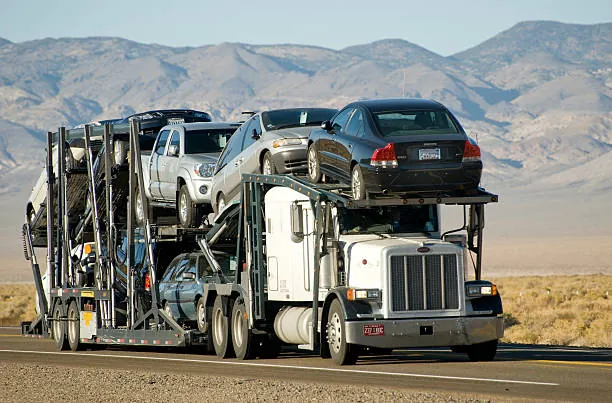
Colorado splits cleanly into two shipping problems. The Front Range — Denver, Colorado Springs, Fort Collins, Boulder — sits on I-25 with good carrier availability and ordinary suburban loading. It behaves like any other well-served metro corridor.
West of there, I-70 climbs through the Rockies, and everything changes. Mountain resort towns, high passes, chain laws, avalanche closures and grades that a loaded 75-foot carrier has to take seriously. A vehicle going to Vail or Aspen is a different job from one going to Denver, and it is priced and scheduled differently.
The corridors that serve Colorado
Two interstates and a set of mountain highways:
- I-25 runs north–south along the Front Range from Wyoming through Fort Collins, Denver and Colorado Springs to Pueblo and New Mexico. The state's main freight spine.
- I-70 crosses east–west from Kansas through Denver and over the Rockies toward Grand Junction and Utah. The critical and most weather-exposed corridor in the state.
- I-76 connects Denver northeast toward Nebraska and the I-80 transcontinental route.
- US-285 and US-50 serve the southern mountains and the San Luis Valley, well off the interstate network.
- Denver's position at the crossing of I-25 and I-70 makes it the region's freight hub and the easiest place in the state to collect or deliver a vehicle.
The I-70 mountain corridor
The single most important factor in Colorado transport, and it applies for roughly five months of the year:
- Chain and traction laws are enforced on I-70 in winter conditions and apply to commercial vehicles. They slow everything and sometimes stop it.
- Closures happen for snow, avalanche control and accidents, and the corridor has very limited alternatives — a closure means waiting, not rerouting.
- Vail Pass and the Eisenhower Tunnel approach are the usual pinch points, at high elevation with sustained grades.
- Ski season traffic, roughly December through March, adds heavy congestion on weekends on top of the weather.
- Resort town deliveries — Vail, Aspen, Breckenridge, Telluride, Steamboat — are priced above Denver and take longer to assign, because fewer carriers will commit to the run.
- Build real buffer into any winter mountain delivery date. A day's delay on this corridor is routine.
Seasonal patterns
Colorado's calendar is driven by snow at both ends of the year:
- Ski season, December through March, brings vehicles into the mountain corridor and congestion with them.
- Spring, April and May, is the most variable period: mountain passes can still close while the Front Range is mild.
- Summer, June through August, is peak relocation season and the easiest time to move a vehicle anywhere in the state.
- Autumn is the best value window, with good weather and demand between the summer and ski peaks.
- Front Range lanes run reliably year-round and are far less exposed to the seasonal pattern than mountain lanes.
Altitude and what it does to a vehicle
Genuine considerations at Colorado elevations, most of which surprise people arriving from sea level:
- Tire pressures change with altitude and temperature. Check them before pickup, especially on a vehicle that has sat.
- Batteries are stressed by sustained cold at elevation, and a vehicle that has sat outside through a mountain winter frequently will not start.
- Older or carburetted vehicles may run poorly at high elevation, which matters if the car has to drive onto a ramp under its own power.
- Sustained descents are demanding on a loaded carrier's brakes, which is part of why mountain runs are priced higher.
- If your vehicle may not start, say so — a car that rolls and steers is straightforward. See inoperable vehicle transport.
What ships on Colorado lanes
A mix shaped by the outdoors and by the resort economy:
- A very high proportion of AWD and 4WD vehicles, SUVs and trucks, priced on size and weight.
- Luxury and exotic vehicles into and out of the resort towns, often seasonally and often enclosed. See luxury and exotic transport.
- Second-home and seasonal vehicles moving in and out on the ski calendar.
- RVs and trailers, given the size of the outdoor recreation population. See RV transport.
- Corporate relocations into the growing Front Range metros. See corporate relocation car shipping.
Colorado metros we ship to and from
We collect and deliver anywhere in Colorado, not only in these metros. This is what is worth knowing about the busiest ones:
- Denver. At the junction of I-25 and I-70, the region's freight hub with the best availability and easiest loading in the state.
- Colorado Springs. On I-25 south of Denver, well served with straightforward suburban access and significant military movement.
- Fort Collins. North on I-25, easy loading and reliable availability.
- Boulder. Close to Denver with good availability; some older neighborhoods have narrow streets that need a meeting point.
- Aurora and the Denver suburbs. Among the easiest loading in the state, with wide streets and room to work.
- Vail, Breckenridge and Summit County. Mountain corridor deliveries on I-70. Priced above Denver, longer to assign, and exposed to winter closures.
- Aspen. Well off I-70 on SR-82, with limited carrier willingness and a rate that reflects the run. Book well ahead.
- Grand Junction. Western Colorado on I-70 near the Utah border, a separate market with the mountain corridor between it and Denver.
Questions about Colorado car shipping
Can you deliver to a mountain resort town?
Yes, to Vail, Breckenridge, Aspen, Steamboat, Telluride and the rest. Expect a higher rate than Denver and a longer wait to assign, because fewer carriers will commit to a mountain run — particularly in winter, when chain laws and closures apply on I-70. Book further ahead than you would for a Front Range delivery.
Does I-70 really close?
Regularly, in winter. Snow, avalanche control and accidents all close the corridor, and there is very little alternative routing, so a closure means waiting rather than diverting. Chain and traction laws for commercial vehicles apply frequently even when the road is open. Build buffer days into any winter mountain delivery.
Is Denver easy to ship to?
Yes. It sits at the crossing of I-25 and I-70, which makes it the regional freight hub with the best availability and most straightforward loading in the state. Front Range lanes generally run reliably year-round and are far less exposed to the seasonal pattern than mountain lanes.
When is the best time to ship a car in Colorado?
Autumn is usually the best value: good weather, and demand sitting between the summer relocation peak and the ski season. Summer is the easiest for mountain deliveries. Winter is workable everywhere but needs buffer days on anything crossing I-70, and spring is the most variable because passes can still close while Denver is mild.
Will altitude affect my vehicle?
Transit itself is fine. The practical issues are tire pressures, which change with altitude and temperature, and batteries, which are stressed by sustained cold at elevation — a vehicle that has sat outside through a mountain winter often will not start. Check both before pickup, and tell us if the car will not start so the right equipment is assigned.
Popular Colorado routes
Lane-specific detail on distance, transit, seasonal demand and pricing for the routes people ask about most:
Services on Colorado lanes
Open car transport
Enclosed car transport
Luxury and exotic car transport
RV and motorhome transport
States connected to Colorado
Arizona car shipping
Southwest toward Phoenix and the I-40 corridor.
Texas car shipping
South on I-25 and US-287 toward the Panhandle.
Illinois car shipping
East on I-76 and I-80, or I-70.
Planning a Colorado move
How much does it cost to ship a car?
The price is set by the lane, not by miles alone: distance, direction, season and how many trucks are already going your way.
How long does car shipping take?
Pickup usually happens within a window of a few days of your first available date, often sooner on busy lanes.
Shipping somewhere else? See all states we cover, or popular routes.
Ready when you are
Send the route and we will price the actual lane.
A written quote, a vetted carrier and confirmed insurance. Nothing is charged until a driver is booked.