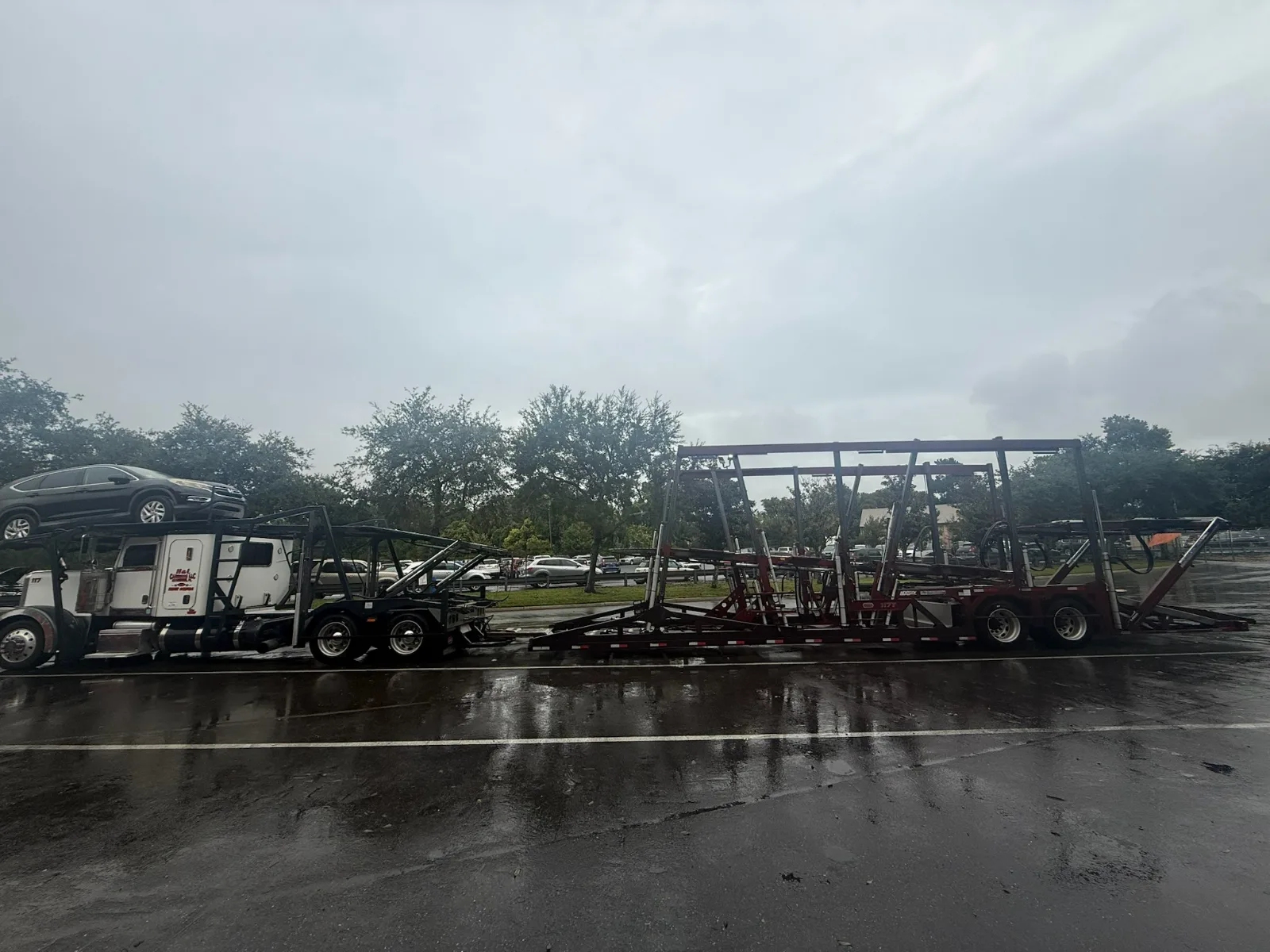
Distance. Roughly 700 to 1,400 miles depending on the metros — Houston to Pensacola at the short end, El Paso or Dallas to Miami at the long end.
Typical transit. Generally two to five days once the vehicle is collected, plus the pickup window on the front. Transit estimates are guidelines, not guarantees: federal hours-of-service limits, weather and routing all affect them.
This is a comparatively short lane by long-distance transport standards, and almost all of it runs on a single interstate. Houston to the Florida panhandle is a straight Gulf Coast run that can be done in a couple of days, which makes it one of the quicker interstate moves available.
Two things complicate an otherwise simple lane. Both endpoints sit on the Gulf, so hurricane season affects the origin and the destination simultaneously. And Florida's peninsula means the final leg can add several hundred miles after the corridor work is done.
The route your vehicle takes
One dominant corridor with a peninsula at the end:
- I-10 east from Houston through Beaumont, Lake Charles, Baton Rouge, Mobile and into the Florida panhandle. The whole spine of the lane.
- I-45 or I-20 south and east first from Dallas–Fort Worth to reach I-10.
- I-75 south from the panhandle for Gulf-side destinations — Tampa, Naples, Fort Myers.
- I-95 south via Jacksonville for Atlantic-coast destinations — Daytona, West Palm Beach, Miami.
- I-4 across the middle for Orlando and the interior.
- The peninsula leg is the variable: Pensacola is a short run from Houston, Miami is a much longer one.
Hurricane season affects both ends
Unusual among the lanes we cover, and worth planning for between June and November:
- Both the Texas Gulf Coast and Florida are exposed, so a storm can disrupt the origin, the destination or the corridor between them.
- Dispatch is suspended into and out of an affected region until it is safe.
- Evacuation traffic ties up capacity across the region even where the storm does not land.
- After a storm, demand spikes while capacity is still disrupted, which is the tightest this lane gets.
- Build buffer days into any fixed arrival date between June and November rather than relying on the estimate.
- Inland Texas pickups — Dallas, Austin, San Antonio — are far less exposed than Houston.
Timing and seasonal demand
Moderate seasonality, with two patterns layered on:
- Late October to mid-December sees some snowbird lift into Florida, though far less than on the I-95 corridor from the Northeast.
- March to early May is the corresponding northbound and outbound peak from Florida.
- Summer, May through August, is peak relocation season and the busiest general period.
- Gulf summer heat and daily thunderstorms are routine and do not usually delay loads.
- Winter is generally easy on this corridor, with no pass risk and mild conditions throughout.
- A week or two of lead time is normally enough outside peak season.
What drives the price
On a shorter lane, some factors weigh differently than on a coast-to-coast run:
- Which Florida destination. The peninsula leg can add several hundred miles after the I-10 work is done.
- Which Texas origin. Houston sits on the corridor; Dallas, El Paso and the Panhandle each add a different amount at the front.
- Vehicle size and weight, with the usual Texas caveat that full-size trucks and lifted vehicles are priced on dimensions.
- Short-haul economics. On lanes under about 1,000 miles the driver's time matters proportionally more than the mileage, so the per-mile rate looks higher than on a long lane.
- Date flexibility, which widens the carrier pool as always.
- Access at both ends, meaning gated Florida communities and the occasional central Houston or Austin pickup.
What ships on this lane
A broad mix reflecting both states:
- Relocations between two fast-growing states, which are the bulk of the volume.
- Full-size trucks and SUVs from the Texas end, priced on size and weight.
- Boats and RVs, which both states move in quantity. See boat transport and RV transport.
- Dealer and auction vehicles between two very active auction markets. See dealer and auction transport.
- Heavy equipment along the Gulf industrial corridor. See heavy equipment transport.
Questions about this route
How long does Texas to Florida take?
Generally two to five days once collected, plus the pickup window. Houston to the Florida panhandle is a short run on I-10; Dallas or El Paso to Miami is considerably longer because of both the Texas origin and the Florida peninsula leg.
Does hurricane season affect this route?
More than most, because both ends are on the Gulf. A storm can disrupt the Texas origin, the Florida destination or the corridor between them, and dispatch is suspended into and out of affected regions. Between June and November, build buffer days into a fixed arrival date. Inland Texas pickups are far less exposed than Houston.
Is this a cheap lane?
In absolute terms it is one of the cheaper interstate moves we handle, because it is comparatively short and runs on a single well-trafficked corridor. Per mile it will look higher than a coast-to-coast lane, which is normal — on shorter hauls the driver's time matters more than the mileage.
Which Florida destinations are quickest?
The panhandle — Pensacola, Tallahassee — because they sit directly on I-10 with no peninsula leg. Tampa and Orlando add a few hundred miles, and Miami, Naples and Fort Lauderdale are the furthest, since the peninsula is long.
Can you carry a boat or RV on this lane?
Yes, and both states move a lot of them. They are priced on real dimensions rather than a model name, and anything over 8 feet 6 inches wide needs permits in every state crossed. Measure width and height as the unit will actually travel and we will quote it properly.
Both ends of this lane
Texas car shipping
Corridors, access, seasonal pricing and what ships there.
Florida car shipping
Corridors, access, seasonal pricing and what ships there.
Related routes
Services on this route
Planning this move
How long does car shipping take?
Pickup usually happens within a window of a few days of your first available date, often sooner on busy lanes.
How to prepare your car for transport
Wash the car and photograph every side, the roof and the wheels, with the date visible.
What's included in a car shipping quote?
A useful quote states the price, the route, the vehicle, open or enclosed, and the pickup window it assumes.
Ready when you are
We price this lane, not a national average.
Send the two ZIP codes and the vehicle for a written quote. Nothing is charged until a driver is booked.