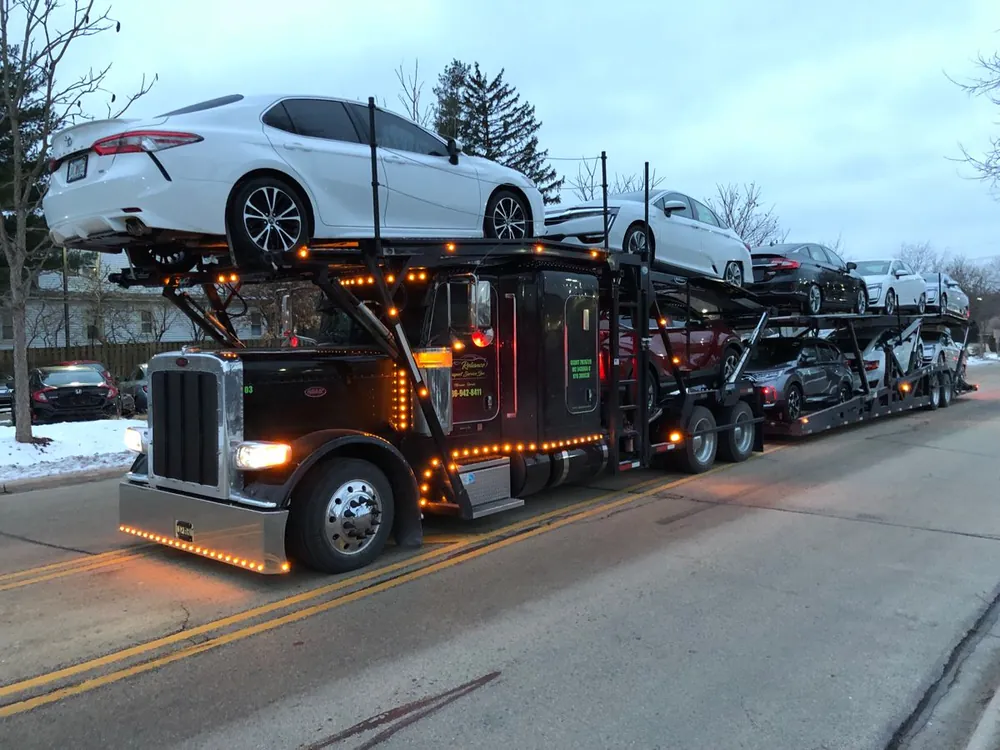
Distance. Roughly 2,400 to 3,100 miles depending on the metros — Los Angeles to Jacksonville is at the short end, San Francisco to Miami at the long end.
Typical transit. Generally seven to ten days once the vehicle is collected, plus the pickup window on the front. Transit estimates are guidelines, not guarantees: federal hours-of-service limits, weather and routing all affect them.
This is a coast-to-coast move on the southern transcontinental route, and the good news is that it is one of the most consistently trafficked lanes in the country. Carriers run it constantly in both directions, so availability is rarely the constraint. On most weeks a load assigns within a few days.
What does move the price is timing. Southbound demand into Florida builds through the autumn and peaks from late October into December, which is when this lane is at its most expensive. Ship it in spring or summer and you are pricing the same route in a much quieter market.
The route your vehicle takes
Almost every carrier on this lane runs the southern corridor, which stays open year-round and avoids the mountain weather that affects northern routes:
- I-10 east from Los Angeles through Phoenix, Tucson, El Paso, San Antonio and Houston, then across Louisiana, Mississippi and Alabama into the Florida panhandle.
- I-8 and I-10 from San Diego, joining the main corridor near Casa Grande.
- I-5 south then I-10 east for vehicles collected in the Bay Area or Sacramento, which adds several hundred miles at the front.
- I-40 as an alternative in high summer, dropping south on I-20 or I-55 to reach the Southeast.
- I-75 or I-95 for the final leg depending on whether you are going to the Gulf side or the Atlantic side.
- This corridor is the main reason the lane is reliable: no mountain passes that close, and heavy commercial traffic the whole way.
Timing and seasonal pricing
Southbound on this lane has a clear and predictable seasonal shape:
- Late October to mid-December is the peak. Snowbird traffic into Florida drives southbound demand across the whole country, and this lane rises with it. Book four to six weeks ahead.
- January to March is moderate, with steady demand and reasonable availability.
- Spring and summer are the value window. Trucks heading into Florida have space, and the same route prices noticeably better.
- June through November is hurricane season in Florida. A named storm suspends dispatch into the affected region, so build buffer days into a fixed arrival date.
- Avoid the last two weeks before a holiday if you can. Capacity tightens across all long lanes.
What drives the price on this lane
The variables, roughly in the order they matter:
- The season, which on this particular lane can be the largest single factor.
- Which metros. Los Angeles to Jacksonville is several hundred miles shorter than San Francisco to Miami, and both ends being on the main corridor helps more than the mileage alone.
- Vehicle size and weight. A full-size SUV takes noticeably more deck than a sedan.
- Open or enclosed. Enclosed typically runs 40% to 60% above the open rate, and on a lane this long that is a real number.
- Whether it runs. A non-runner needs a winch-equipped carrier. See inoperable vehicle transport.
- Date flexibility. A three-day pickup window is worth real money on a lane this long.
- Access at both ends, which on this lane usually means a California hillside at one end and a gated Florida community at the other.
Access at each end
Both states present their own constraint, and they are different constraints:
- In California: hillside Los Angeles, dense urban streets and San Francisco's grades are the usual problems. A meeting point at a nearby lot is common.
- In Florida: gated communities, 55-plus developments and coastal condominium buildings rarely admit a 75-foot carrier. Check your community's rules before booking.
- Neither is a problem if it is known at quote stage. Both are a problem if the driver discovers them on the day.
- See door-to-door car shipping for how meeting points are agreed.
Preparing for a long-haul move
Ten days is long enough that a few things matter more than they would on a short lane:
- Photograph the vehicle thoroughly and dated before pickup. On a long lane you will not see it again for over a week.
- Leave about a quarter tank of fuel, and no more.
- Disconnect or tender the battery if the vehicle will sit at either end, and expect a battery that was marginal to be flat on arrival.
- Clear personal items beyond the roughly 100 lb trunk allowance, which is not insured.
- Name a receiving contact in Florida who can inspect and sign if you are flying in separately.
- Inspect properly at delivery before signing the Bill of Lading. That is the step a claim depends on. See insurance and claims.
Questions about this route
How long does it take to ship a car from California to Florida?
Generally seven to ten days once the vehicle is collected, plus the pickup window on the front. It is one of the longest domestic lanes, and transit is governed by federal hours-of-service limits, weather and routing, so a day either way is ordinary. You get a delivery window, not a promised hour.
When is the cheapest time to ship California to Florida?
Spring and summer. The expensive window is late October through mid-December, when snowbird demand drives southbound rates up across the country. Moving two or three weeks either side of that peak puts you on the same route in the same truck for meaningfully less.
Is it cheaper going the other way?
Often, and it depends on the season. Carriers price each direction on how they are repositioning that week, so the two directions of this lane rarely cost the same. In autumn, southbound is the expensive leg; in spring it reverses. See Florida to California.
Do I need enclosed transport on a lane this long?
Only for the vehicles that would need it anywhere: exotics, classics, fresh paint and cars below about four inches of clearance. Enclosed runs 40% to 60% above the open rate, which on a 2,700 mile lane is a substantial sum. For an ordinary vehicle, open transport across the southern corridor is entirely routine.
What route will the truck take?
Almost certainly I-10 east from Los Angeles through Phoenix, El Paso, San Antonio and Houston, then across the Gulf states into the Florida panhandle. The southern corridor has no passes that close and heavy year-round commercial traffic, which is what makes this lane so consistently available.
Both ends of this lane
California car shipping
Corridors, access, seasonal pricing and what ships there.
Florida car shipping
Corridors, access, seasonal pricing and what ships there.
Related routes
Services on this route
Open car transport
Enclosed car transport
Snowbird and seasonal car shipping
Door-to-door car shipping
Planning this move
How long does car shipping take?
Pickup usually happens within a window of a few days of your first available date, often sooner on busy lanes.
How to prepare your car for transport
Wash the car and photograph every side, the roof and the wheels, with the date visible.
What's included in a car shipping quote?
A useful quote states the price, the route, the vehicle, open or enclosed, and the pickup window it assumes.
Ready when you are
We price this lane, not a national average.
Send the two ZIP codes and the vehicle for a written quote. Nothing is charged until a driver is booked.