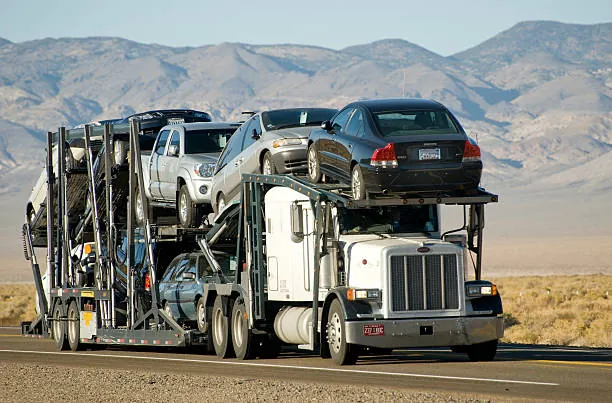
Distance. Roughly 2,400 to 3,100 miles depending on the metros — Jacksonville to Los Angeles is at the short end, Miami to San Francisco at the long end.
Typical transit. Generally seven to ten days once the vehicle is collected, plus the pickup window on the front. Transit estimates are guidelines, not guarantees: federal hours-of-service limits, weather and routing all affect them.
Westbound out of Florida is the same road as the eastbound leg, but it is not the same market. Demand on this direction builds in spring, as seasonal residents head back north and west, and softens through the autumn when the traffic is all going the other way.
That gives this lane a useful property: for several months of the year, carriers running into Florida with full trailers want a westbound load to avoid going home empty. If your dates land in that window, this is one of the better-value long-haul lanes in the country.
Why direction changes the price
This is the clearest example on the site of why we quote lanes rather than mileage:
- A carrier's worst outcome is driving a long distance with an empty trailer, so rates track how badly trucks need a load in each direction.
- In autumn, trucks pour into Florida with snowbird vehicles and need westbound freight to get back. Westbound rates soften.
- In spring, the flow reverses: everyone is leaving Florida at once, westbound capacity is in demand, and rates climb.
- Summer sits between the two, with steady relocation traffic in both directions.
- This is why the same 2,700 miles can price differently in each direction, and why it is worth asking us about both if your dates have any give in them.
The route your vehicle takes
The southern corridor, run in reverse, and reliable for the same reasons:
- I-10 west across the panhandle, then Alabama, Mississippi and Louisiana into Houston and San Antonio.
- I-10 continues through El Paso, Tucson and Phoenix into the Los Angeles basin.
- I-75 or I-95 north first from the peninsula to reach I-10, which adds several hundred miles from Miami or Naples.
- I-5 north at the end for deliveries to the Bay Area, Sacramento or anywhere above Los Angeles.
- No mountain passes that close. Unlike northern transcontinental routes, this corridor runs all winter without weather risk.
Timing this lane well
The calendar for westbound out of Florida:
- March through early May is the peak. Seasonal residents leaving Florida compete for the same trucks. Book four to six weeks ahead.
- Autumn is the value window, particularly October through December, when carriers arriving with southbound loads need westbound freight.
- Summer is moderate, with general relocation traffic in both directions and lead times lengthening from May.
- Hurricane season, June through November, can suspend dispatch out of the affected region at short notice. Build buffer into a fixed departure.
- After a major storm, outbound demand from Florida spikes while capacity is still disrupted. It is the tightest this lane ever gets.
What ships westbound on this lane
The vehicle mix here is different from the eastbound leg, and it affects what service fits:
- Snowbird vehicles that have sat through a Florida summer or winter, of which a meaningful share will not start. Check the battery and tire pressures before pickup.
- Collector and exotic cars moving out after the winter Florida auction and show season, frequently enclosed.
- Boats and RVs, which Florida sends west in volume. See boat transport and RV transport.
- Relocations, which are the bulk of the volume and ship on open carriers.
- Dealer and auction vehicles moving between two very active auction markets. See dealer and auction transport.
Access at each end
Reversed from the eastbound leg, and worth flagging at quote stage:
- In Florida: gated communities, 55-plus developments and coastal condominium buildings are the usual pickup constraint. Arrange gate access and release authority in advance.
- In California: hillside and dense urban delivery addresses in Los Angeles and San Francisco often require a meeting point.
- If you are flying ahead of the vehicle, name a receiving contact over 18 in California who can inspect and sign the Bill of Lading.
- A vehicle arriving before you do needs somewhere legal to sit. Plan that before it ships.
Questions about this route
Is Florida to California cheaper than California to Florida?
It depends entirely on the month. In autumn, westbound out of Florida is usually the cheaper direction because carriers arriving with snowbird loads need freight to get home. In spring it reverses, and westbound becomes the expensive leg. Ask us to price both if your dates are flexible.
How long does the trip take?
Generally seven to ten days once collected, plus the pickup window. The southern corridor has no passes that close, so unlike northern transcontinental routes this lane is not exposed to winter weather delay — the main seasonal risk is a hurricane suspending dispatch at the Florida end.
When is the busiest time on this lane?
March through early May, when seasonal residents leave Florida en masse and compete for the same westbound trucks. Book four to six weeks ahead in that window. October through December is the quiet, better-value stretch.
My car has been sitting and may not start. Does that matter?
Yes — it changes the equipment and the price, and it is common on this lane. A car that rolls, steers and brakes but will not start is winched on, which is routine for a suitably equipped carrier. Tell us before pickup rather than after; an undisclosed non-runner means a refused load at the curb.
Can you collect from a gated community in Florida?
Usually at a nearby lot rather than inside it. Most gated and 55-plus communities prohibit commercial carriers or have height barriers, and their internal roads will not take a 75-foot rig. Arrange gate access and release authority in advance and tell us what your community requires.
Both ends of this lane
Florida car shipping
Corridors, access, seasonal pricing and what ships there.
California car shipping
Corridors, access, seasonal pricing and what ships there.
Related routes
Services on this route
Snowbird and seasonal car shipping
Open car transport
Inoperable vehicle transport
Enclosed car transport
Planning this move
How long does car shipping take?
Pickup usually happens within a window of a few days of your first available date, often sooner on busy lanes.
How to prepare your car for transport
Wash the car and photograph every side, the roof and the wheels, with the date visible.
What's included in a car shipping quote?
A useful quote states the price, the route, the vehicle, open or enclosed, and the pickup window it assumes.
Ready when you are
We price this lane, not a national average.
Send the two ZIP codes and the vehicle for a written quote. Nothing is charged until a driver is booked.