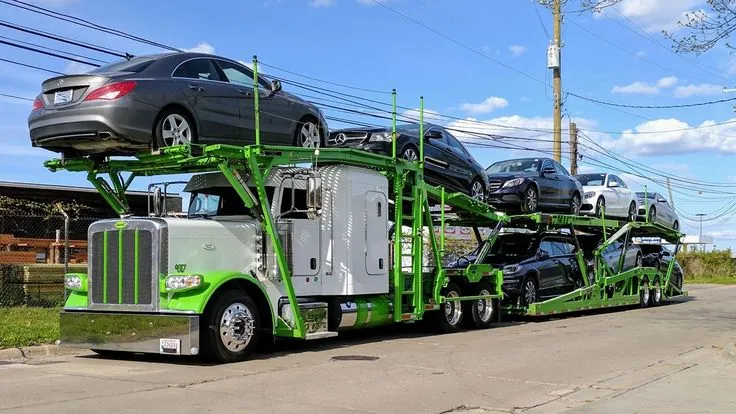
Distance. Roughly 1,100 to 1,500 miles depending on the metros — Jacksonville to New York City at the short end, Miami to upstate New York at the long end.
Typical transit. Generally three to six days once the vehicle is collected, plus the pickup window on the front. Transit estimates are guidelines, not guarantees: federal hours-of-service limits, weather and routing all affect them.
Northbound out of Florida runs the same interstate as the southbound leg and behaves like a completely different lane. The demand peak is in March, April and early May rather than October to December, and the two hardest practical problems swap ends: the gated community is now the pickup, and New York City is now the delivery.
It also has a distinctive quirk. A large share of the vehicles on this lane have been sitting for months, which makes non-starting cars far more common northbound than on almost any other route in the country.
The northbound calendar
The mirror image of the southbound peak, and just as predictable:
- March through early May is the peak. Seasonal residents heading home compete for the same trucks. Book four to six weeks ahead.
- Late spring into summer is moderate, with general relocation traffic taking over from seasonal traffic.
- Autumn is the value window northbound, because the seasonal flow is all going south.
- Shifting two or three weeks either side of the spring peak saves real money on the same corridor.
- Book both legs at once if you make the trip every year — it is the most effective thing a returning snowbird can do.
- Hurricane season, June through November, can suspend outbound dispatch around a named storm, and demand spikes afterwards.
Cars that have been sitting
More relevant on this lane than on any other, because of who ships on it:
- Batteries are the usual casualty of a vehicle left for a season. Check it a few days before pickup rather than on the morning.
- Tires lose pressure and develop flat spots. Inflating them makes loading dramatically easier and cheaper.
- Check for fluid leaks that developed in storage. A dripping vehicle can be refused at the curb.
- Rodent damage to wiring is common in stored vehicles and is not something the carrier caused. Photograph the engine bay before pickup.
- A car that will not start is fine — but tell us, because it needs a winch-equipped carrier and is priced differently. See inoperable vehicle transport.
- An undisclosed non-runner means a refused load and a repositioning fee. Accuracy at quote stage costs nothing.
The route your vehicle takes
I-95 north, the busiest vehicle corridor on the East Coast:
- I-95 north from South Florida through Jacksonville, Georgia, the Carolinas, Virginia, Maryland and New Jersey into the New York metro.
- I-75 north first from Gulf-side pickups — Naples, Fort Myers, Tampa — joining I-95 in Georgia.
- I-87 north at the end for upstate New York deliveries.
- I-4 across the middle for Orlando and interior pickups.
- The corridor is heavily trafficked year-round, so outside severe weather both availability and transit are reliable.
Delivery into New York
The constraint at this end is the hardest on the lane, and worth settling before you book:
- Manhattan delivery at the address is rarely possible. Expect a meeting point in New Jersey, Queens or the Bronx, agreed in advance.
- Brooklyn and Queens vary block by block. Give us the exact street at quote stage.
- Long Island delivers easily in the suburbs; the parkway network is closed to commercial vehicles so routing is constrained.
- Upstate New York is straightforward, with winter the only real variable — an unploughed driveway will stop a delivery.
- Spring arrivals are the common case on this lane and generally avoid winter problems entirely.
- See New York car shipping for the full borough picture.
Pickup in Florida
Straightforward once the community access is arranged:
- Most gated and 55-plus communities prohibit commercial carriers or have height barriers at the gate.
- Arrange gate registration, access hours and release authority before the driver arrives.
- Coastal condominium addresses usually have nowhere legal for a carrier to stop; expect a nearby lot.
- If you are flying north before the vehicle ships, name a local Florida contact over 18 who can release it.
- Have the keys, and only the set you want to send — one travels with the car, you keep a spare.
Questions about this route
When is the busiest time for Florida to New York?
March through early May, when seasonal residents head home and compete for the same northbound trucks. Book four to six weeks ahead in that window. Autumn is the quiet, better-value stretch northbound, because the seasonal flow is all heading south.
How long does the trip take?
Generally three to six days once collected, plus the pickup window on the front. I-95 is the busiest vehicle corridor on the East Coast, so outside severe weather both availability and transit on this lane are reliable.
My car has been sitting all winter and will not start. Is that a problem?
It is common on this lane specifically, and it is fine as long as you tell us. A car that rolls, steers and brakes but will not start is winched on by a suitably equipped carrier. What causes problems is an undisclosed non-runner at the curb, which means a refused load and a repositioning fee. Check the battery and tires a few days before pickup.
Can the truck deliver to my address in New York City?
In Manhattan, almost never, and in much of Brooklyn it depends on the block. There is nowhere legal for a 75-foot carrier to stop in most of the city, and the parkways in are closed to commercial vehicles. Expect a meeting point in New Jersey, Queens or the Bronx, agreed with you in advance.
Should I book the return leg at the same time?
If you make the trip annually, yes — it is the single most effective thing a returning seasonal resident can do. Booking both legs together locks in capacity on the two most predictable peaks in the industry rather than pricing each one at the worst possible moment.
Both ends of this lane
Florida car shipping
Corridors, access, seasonal pricing and what ships there.
New York car shipping
Corridors, access, seasonal pricing and what ships there.
Related routes
Services on this route
Snowbird and seasonal car shipping
Inoperable vehicle transport
Open car transport
Door-to-door car shipping
Planning this move
How long does car shipping take?
Pickup usually happens within a window of a few days of your first available date, often sooner on busy lanes.
How to prepare your car for transport
Wash the car and photograph every side, the roof and the wheels, with the date visible.
What's included in a car shipping quote?
A useful quote states the price, the route, the vehicle, open or enclosed, and the pickup window it assumes.
Ready when you are
We price this lane, not a national average.
Send the two ZIP codes and the vehicle for a written quote. Nothing is charged until a driver is booked.