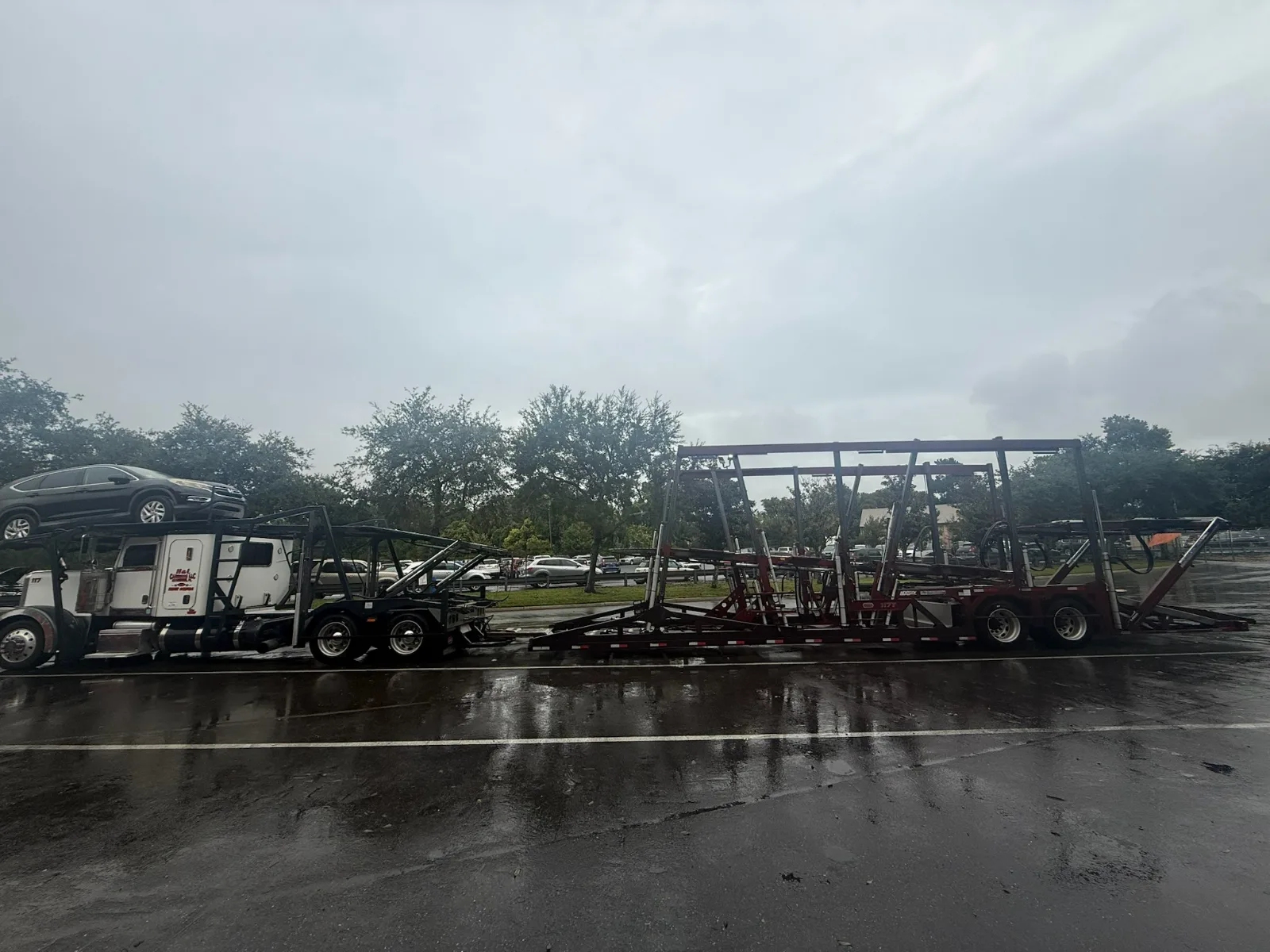
Almost every difficulty in New York car shipping is about where the truck can physically go. In the five boroughs a 75-foot carrier has very few legal options: streets are narrow, parking is continuous, bridges and parkways carry commercial vehicle bans, and stopping a rig anywhere for twenty minutes is a genuine problem. It is the most access-constrained major market in the United States.
Upstate New York is an entirely different job. Albany, Rochester, Buffalo and Syracuse sit on good corridors with suburban loading as easy as anywhere in the country. What upstate has instead is winter, which is a real scheduling factor for five months of the year.
New York City access, and how it actually works
Worth reading before you book, because it determines your entire pickup experience:
- Parkways are banned to commercial vehicles. The Hutchinson, Saw Mill, Bronx River, Belt and most other parkways cannot legally carry a car carrier, and several have low bridges that physically will not admit one.
- Manhattan pickups are rarely done at the address. There is almost nowhere a full-size carrier can legally stop. Expect a meeting point, often in New Jersey, the Bronx or Queens.
- Brooklyn and Queens vary street by street. Wide avenues can work; residential side streets generally cannot.
- Staten Island and the outer Bronx are usually the easiest of the five boroughs.
- Alternate-side parking and street cleaning remove what little curb space exists on the days they apply.
- Smaller trucks are sometimes used to shuttle a vehicle out to a full-size carrier, which adds cost but solves an impossible address.
- None of this is a failure of the booking. It is the physical reality of the city, and it is far better handled at quote stage than at 7am on pickup day.
The corridors that serve New York
The state's geography puts it at the top of the eastern seaboard, with routes running two ways:
- I-95 runs south through New Jersey, Philadelphia, Baltimore and Washington toward the Carolinas and Florida. The busiest vehicle corridor on the East Coast and the main snowbird lane.
- I-87, the Thruway, runs north from New York City through Albany toward Montreal.
- I-90, the Thruway's east–west arm, connects Albany through Syracuse, Rochester and Buffalo toward Cleveland and Chicago.
- I-80 and I-78 across New Jersey are the practical westbound routes for a vehicle leaving the New York metro.
- I-84 crosses the lower Hudson Valley, linking New England to Pennsylvania.
- Tolls on the Thruway and the crossings are a real cost on these lanes and are built into the rate rather than added later.
Upstate winter
From roughly November through March, weather is the main scheduling variable outside the city:
- Lake-effect snow around Buffalo, Syracuse and Watertown can stop movement for a day or more with little notice.
- The Thruway closes to commercial traffic during severe storms, which halts loads mid-route.
- Rural driveways and unploughed roads are a common pickup problem; a loaded carrier will not attempt a snow-covered slope.
- Build buffer days into any fixed winter arrival date. A storm day is ordinary, not exceptional.
- Road salt is heavy on these routes all winter. For a vehicle where that matters, enclosed transport is a reasonable choice in this specific window.
Seasonal patterns specific to New York
Three calendars drive demand on New York lanes:
- Snowbird southbound from October, with New York to Florida among the heaviest seasonal lanes in the country. Book four to six weeks ahead. See snowbird car shipping.
- Snowbird northbound from March through early May, the same traffic returning.
- College moves in mid-August and early May, given the density of universities across the state. See college student car shipping.
- Summer relocations from May through August, when lead times lengthen on every lane.
- Outside those windows, New York lanes are well served and dispatch quickly.
Practical advice for a New York move
Five things that make a real difference here and nowhere else as much:
- Tell us your exact street at quote stage, not just the borough. Access varies block by block and it changes the plan.
- Be flexible about the meeting point. Accepting a lot in Queens rather than insisting on a Manhattan curb is often the difference between shipping this week and next.
- Allow more time on pickup day than you would elsewhere. City loading is slower.
- Check whether your building or garage has its own restrictions and hours, and tell us.
- If you are moving out of the city permanently, consider driving the vehicle to a suburban meeting point yourself. It frequently reduces both the price and the hassle.
New York metros we ship to and from
We collect and deliver anywhere in New York, not only in these metros. This is what is worth knowing about the busiest ones:
- Manhattan. Almost always a meeting point rather than a door pickup; there is nowhere legal for a full-size carrier to stop. Often met in New Jersey, Queens or the Bronx.
- Brooklyn. Varies block by block. Wide avenues can take a carrier; most residential side streets cannot.
- Queens. Generally more workable than Brooklyn or Manhattan, and a common meeting point for vehicles coming out of the city.
- The Bronx. The outer sections are among the easier borough pickups, with better access to I-95 and I-87.
- Staten Island. The easiest of the five boroughs for a full-size carrier, with suburban streets and room to work.
- Long Island. Suburban loading is straightforward, though the Nassau and Suffolk parkway network is closed to commercial vehicles, so routing is constrained.
- Albany and the Capital Region. At the junction of I-87 and I-90, with good availability and easy suburban access.
- Buffalo, Rochester and Syracuse. Straightforward loading on the I-90 corridor, with lake-effect snow the main winter variable.
Questions about New York car shipping
Can a car carrier pick up in Manhattan?
Very rarely at the actual address. There is almost nowhere a 75-foot carrier can legally stop in Manhattan, and the parkways that lead into it are closed to commercial vehicles with low bridges that physically block them. The driver will arrange a meeting point, commonly in New Jersey, Queens or the Bronx, and agree it with you in advance.
Why is New York City shipping more expensive?
Access, time and tolls. City pickups take far longer than suburban ones, routing is constrained by commercial vehicle bans, sometimes a smaller shuttle truck is needed to reach the vehicle at all, and the crossings carry real toll costs. None of that applies upstate, where rates look like any other suburban market.
How is upstate New York different from the city?
It is an ordinary long-haul market with easy suburban loading and good corridors on I-87 and I-90. The one real variable is winter: lake-effect snow around Buffalo and Syracuse can stop movement for a day or more, and the Thruway closes to commercial traffic in severe storms.
When should I book a New York to Florida shipment?
Four to six weeks ahead for a southbound move between late October and mid-December, which is one of the heaviest seasonal lanes in the country. The same applies northbound from March through early May. Outside those windows a week or two is usually enough.
Can I meet the truck somewhere easier myself?
Yes, and in the city it is often the best decision you can make. Driving the vehicle to a suburban or New Jersey meeting point regularly reduces both the price and the difficulty, and we will tell you honestly when it is worth doing.
Popular New York routes
Lane-specific detail on distance, transit, seasonal demand and pricing for the routes people ask about most:
Services on New York lanes
Door-to-door car shipping
Snowbird and seasonal car shipping
Open car transport
College student car shipping
States connected to New York
Florida car shipping
South on I-95, the country's busiest seasonal lane.
Illinois car shipping
West on I-90 and I-80 to Chicago.
Planning a New York move
How much does it cost to ship a car?
The price is set by the lane, not by miles alone: distance, direction, season and how many trucks are already going your way.
How long does car shipping take?
Pickup usually happens within a window of a few days of your first available date, often sooner on busy lanes.
Shipping somewhere else? See all states we cover, or popular routes.
Ready when you are
Send the route and we will price the actual lane.
A written quote, a vetted carrier and confirmed insurance. Nothing is charged until a driver is booked.