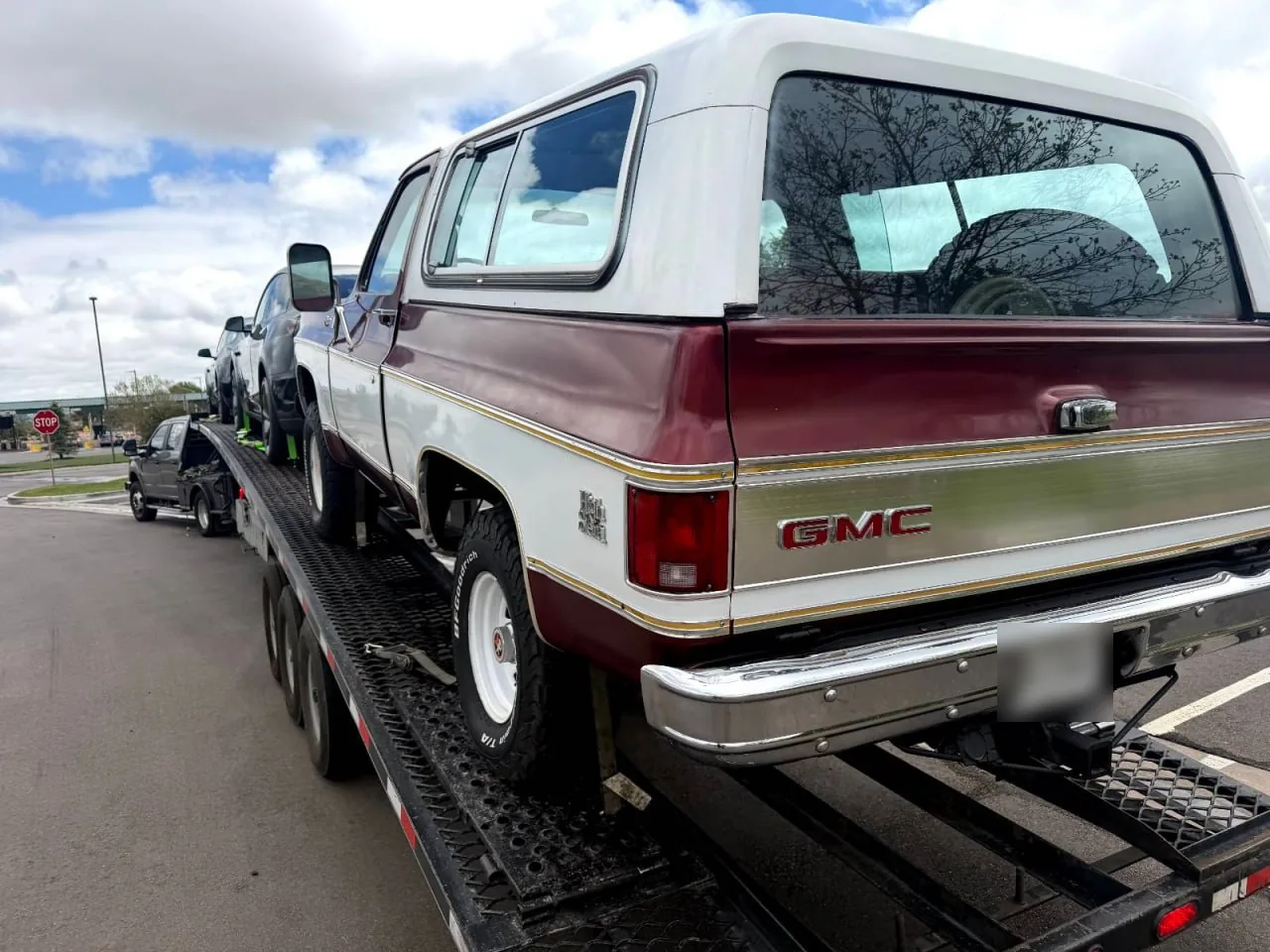
Most vehicles moving by road between New York City and the South or West cross New Jersey, so carriers are always nearby. The Turnpike, I-78, I-80 and I-295 carry them through the state every day, and the lots along those corridors are where many New York City shipments are actually handed over.
The difficulty in New Jersey auto transport is the final stretch. The Garden State Parkway is closed to trucks from Monmouth County north, older North Jersey towns have narrow streets and continuous parking, and the Shore is a seasonal market of its own. None of it stops a shipment, but all of it is better settled at quote stage than on pickup day.
The corridors that serve New Jersey
New Jersey is a corridor state, and which road a carrier can use matters more here than the mileage:
- The New Jersey Turnpike runs from the Delaware Memorial Bridge to the George Washington Bridge and carries I-95 through the north of the state. The main truck route between the Northeast and everything to the south.
- The Garden State Parkway is closed to vehicles over 10,000 pounds north of Interchange 105, and every car carrier is over that. North Jersey and Shore routing uses the Turnpike, I-287 and state highways instead.
- I-78 runs west from Newark past Clinton to the Lehigh Valley, and I-80 runs west from the George Washington Bridge through Morris County to the Delaware Water Gap.
- I-287 loops around the northern suburbs from Edison to the New York line, the usual way around the dense inner ring.
- I-295 follows the Delaware River from the Delaware Memorial Bridge past Camden and around Trenton, and the Atlantic City Expressway links the Philadelphia suburbs with the southern Shore.
- Tolls on the Turnpike and the Hudson crossings are a real cost on these lanes, and they are included in the rate rather than added later.
North Jersey and the Hudson waterfront
The densest part of the state, and the part most likely to need a meeting point:
- Hoboken, Jersey City and the waterfront towns have narrow streets, permit parking and very little legal stopping for a 75-foot carrier. A nearby lot is the usual pickup.
- Older towns across Essex, Hudson, Passaic and Bergen counties have low railroad bridges and tight turns that limit how a driver can approach an address.
- Morris, Somerset and northern Bergen counties are easier, with wider streets, although some towns restrict trucks on residential roads.
- New York City shipments are often handed over here, because a North Jersey lot is far easier for a carrier than a city street. If you live in the city, meeting the truck on this side of the Hudson can save time.
- Give us the exact address at quote stage. In North Jersey, two streets apart can mean two different plans.
The Jersey Shore
The Shore is a seasonal market with access problems of its own:
- Barrier-island towns such as Long Beach Island, Seaside, Ocean City, the Wildwoods and Cape May are reached by a handful of causeways and bridges and have narrow, heavily parked streets. Expect a meeting point, often on the mainland side.
- Summer weekends between Memorial Day and Labor Day bring heavy traffic toward the islands, so pickups and deliveries are easier midweek.
- Shore houses and second homes mean vehicles move at the start and end of the season, around Memorial Day and Labor Day.
- Coastal storms — nor'easters in autumn and winter and the tail end of hurricane season — can flood low streets and close causeways for a day or more.
Weather and the seasonal calendar
Four patterns drive demand and timing in New Jersey:
- Snowbird season: New Jersey is part of the same I-95 flow to Florida as New York, one of the heaviest seasonal lanes in the country. Southbound fills from October and northbound from March; book four to six weeks ahead. See snowbird and seasonal car shipping.
- Winter storm restrictions: in major storms the state bars tractor-trailers, which includes car carriers, from its interstates. The January 2026 restriction covered I-76, I-78, I-80, I-195, I-280, I-287, I-295 and I-676, but not the Turnpike, the Parkway or the Atlantic City Expressway, so a load can often be rerouted rather than stopped.
- College moves in late August and May around Rutgers in New Brunswick, Princeton, Stevens in Hoboken and Montclair State. See college student car shipping.
- Military moves through Joint Base McGuire-Dix-Lakehurst in Burlington and Ocean counties. See military PCS car shipping.
What ships on New Jersey lanes
A dense state with one of the country's busiest ports produces a distinctive mix:
- Port Newark–Elizabeth is one of the busiest vehicle ports in the country, which is why so many car carriers work the Turnpike around Newark and Elizabeth. That is new-vehicle import and export traffic, not household moves.
- Luxury and collector cars, for which enclosed transport is often worth the difference.
- Snowbird vehicles in both directions on the I-95 cycle.
- Household moves in and out of the New York and Philadelphia metros, which ship well on an open carrier.
New Jersey metros we ship to and from
We collect and deliver anywhere in New Jersey, not only in these metros. This is what is worth knowing about the busiest ones:
- Newark and Elizabeth. At the heart of the Turnpike corridor near the port, with good availability; dense streets usually mean a nearby lot.
- Jersey City and Hoboken. Dense waterfront cities with permit parking and little room for a rig. Expect a meeting point.
- Bergen County. Suburban and well served by the Turnpike, I-80 and I-287, with truck limits on some residential roads.
- Morristown and Morris County. Easy suburban loading on I-80 and I-287.
- New Brunswick and Edison. Central Jersey on the Turnpike and I-287, with Rutgers adding peaks in August and May.
- Princeton and Trenton. Between the Turnpike and I-295, close to the Pennsylvania line.
- Cherry Hill and Camden. Philadelphia's New Jersey suburbs, on I-295 and the Turnpike, with straightforward suburban access.
- The Jersey Shore. From Monmouth County to Cape May: seasonal, island-heavy, and easiest midweek in summer.
Questions about New Jersey car shipping
How much does it cost to ship a car to or from New Jersey?
It depends on the lane, the vehicle, open or enclosed transport and your dates. New Jersey adds two factors of its own: tolls on the Turnpike and the Hudson crossings, which are included in the rate, and access, since a dense North Jersey or Shore address that needs a meeting point takes more time than a suburban one. Snowbird season moves prices on the Florida lanes. Send the two ZIP codes and the vehicle and we will quote the actual lane.
How long does it take to ship a car to or from New Jersey?
As a working guide, allow one to three days in transit for moves under 500 miles, such as Newark to Boston or Cherry Hill to Pittsburgh; three to five days for 500 to 1,500 miles, which covers Florida, Georgia and the Midwest; and seven to ten days coast to coast to California. Add the pickup window on the front. These are estimates, not guarantees: a day either way is ordinary, and a major winter storm can hold a load for a day.
Can a car carrier use the Garden State Parkway?
Not north of Interchange 105. Vehicles over 10,000 pounds, which includes every car carrier, are prohibited on the Parkway north of that point, so drivers use the Turnpike, I-287 or state highways instead. It affects the route and timing to some Shore and North Jersey addresses, not whether we can reach you.
Can you pick up in Hoboken or Jersey City?
Usually at a nearby lot rather than the door. Narrow streets, permit parking and very little legal stopping make a curbside pickup with a 75-foot carrier impractical in most of both cities. The driver agrees a meeting point with you before pickup day.
I live in Manhattan. Should I meet the truck in New Jersey?
Often, yes. A lot in North Jersey is far easier for a carrier than a Manhattan street, and meeting there can shorten the wait for a truck and simplify the pickup. We will tell you honestly when it is worth doing.
Can you deliver to Long Beach Island or another Shore town?
Yes, though often to a meeting point rather than the house. Barrier-island streets are narrow and heavily parked in summer, and a few causeways carry all the traffic. Midweek is easier than a weekend between Memorial Day and Labor Day.
How do winter storms affect New Jersey shipments?
In a major storm the state can bar tractor-trailers, including car carriers, from interstates such as I-78, I-80, I-287 and I-295 until conditions improve. In the January 2026 restriction the Turnpike stayed open to trucks, so a load could be rerouted rather than stopped, but a fixed winter date still needs buffer days.
Routes that run through New Jersey
No route page starts or ends in New Jersey yet. These written lanes run through the state, and what they say about timing, seasonal demand and New York access applies to the New Jersey stretch. For anything else, send the two ZIP codes and we will price the actual lane:
New York to Florida
South through New Jersey on the Turnpike and I-95.
Florida to New York
Northbound into the New York metro, where many deliveries are handed over in New Jersey.
California to New York
The last miles run across New Jersey on I-80 or I-78.
All car shipping routes
Every lane we have written up in detail.
Services on New Jersey lanes
Door-to-door car shipping
Snowbird and seasonal car shipping
Military PCS car shipping
Open car transport
States connected to New Jersey
New York car shipping
Across the Hudson; New Jersey lots are a common meeting point for city shipments.
Pennsylvania car shipping
West across the Delaware on I-78, I-80 or the Turnpike.
Florida car shipping
South on the Turnpike and I-95, the snowbird corridor.
Planning your New Jersey move
How much does it cost to ship a car?
The price is set by the lane, not by miles alone: distance, direction, season and how many trucks are already going your way.
How long does car shipping take?
Pickup usually happens within a window of a few days of your first available date, often sooner on busy lanes.
Shipping somewhere else? See all states we cover, or popular routes.
Ready when you are
Send the route and we will price the actual lane.
A written quote, a vetted carrier and confirmed insurance. Nothing is charged until a driver is booked.