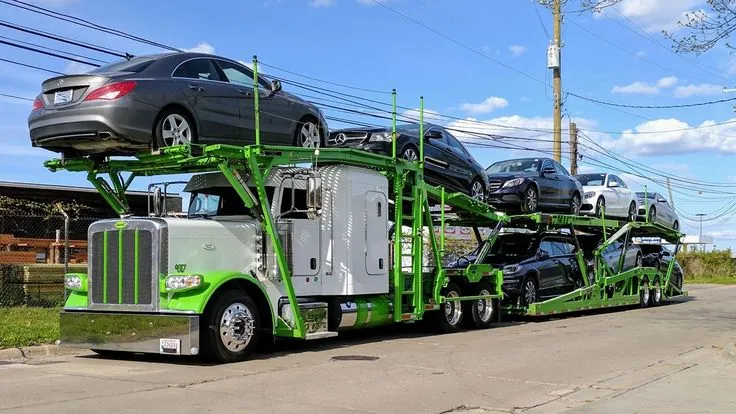
Two weeks of the year, every carrier heading toward a college town is full. Move-in in mid-August and move-out in early May concentrate an enormous amount of freight into a narrow window, on the same routes, at the same time. The families who book three weeks ahead pay a normal rate. The ones who call the week before pay a premium, if a truck can be found at all.
The other thing that goes wrong is delivery. A 75-foot car carrier cannot enter a campus, and most universities do not allow one to try. Sorting the meeting point in advance takes one phone call and saves a very bad afternoon.
Getting the timing right
The calendar is predictable, so it can be planned around:
- Book three to four weeks before move-in. Mid-August southbound and toward the Midwest is the tightest window of the academic year.
- Aim for delivery two or three days before the first class, not the same morning. It absorbs a weather day without drama.
- May is worse than August. Move-out collides with the start of the summer relocation season and trucks disappear quickly.
- Consider shipping just after the rush. Moving a car the week after move-in is often meaningfully cheaper if the student can manage a few days without it.
Delivery to a campus
Campus rules are the part most families have not thought about:
- Most universities prohibit commercial carriers on campus roads entirely. The driver will arrange a nearby retail lot or a designated commercial area instead.
- The student needs a parking permit already in hand, or somewhere legal to leave the car on day one.
- Some residence halls restrict first-year parking altogether. Check before shipping a car that will have nowhere to sit.
- The person receiving the vehicle must be able to inspect it and sign the Bill of Lading. If that is the student rather than the parent who booked, name them on the order.
When a parent books and a student receives
This is the normal arrangement and it works cleanly when set up at booking:
- The booking parent stays the billing and main contact, with the quote and paperwork sent to them.
- The student is listed as the release or receiving contact, with their own phone number for the driver's call-ahead.
- Both get the dispatch details, so nobody is waiting on a forwarded text.
- Walk the student through the delivery inspection in advance. Anything wrong goes on the Bill of Lading before the driver leaves, and a signed clean document is very hard to reopen.
What it costs, and how to keep it down
Student moves are ordinary open-carrier moves priced on the ordinary variables, but a few choices matter:
- Open transport is right for almost every student car. Enclosed is rarely worth the difference here.
- Flexible dates save real money. A three-day window rather than a fixed day widens the pool of carriers considerably.
- Shipping to a major metro near the campus rather than the college town itself can be cheaper on some lanes. We will tell you when that is true.
- Terminal storage is not something we offer, so plan for the car to have somewhere to go on arrival.
Questions about college student car shipping
Can the car be delivered directly to the dorm?
Almost never. Campus roads are closed to commercial carriers at most universities, and a full-size transporter physically cannot maneuver there. The driver arranges a meeting point close by, usually a large retail lot a few minutes away, and agrees it with you in advance.
Can my student sign for the car if I booked it?
Yes. Name them as the receiving contact when you book and give us their phone number for the driver's call-ahead. They will need to inspect the vehicle and sign the Bill of Lading, so go through what to look for beforehand.
How early should we book for August move-in?
Three to four weeks. Mid-August is one of the two busiest windows in auto transport and last-minute bookings into college towns are expensive when they are possible at all.
Can we put belongings in the car?
Up to about 100 pounds in the trunk, below the window line, subject to the carrier agreeing at pickup. It is not covered by cargo insurance and overweight loads can be refused or surcharged. A car carrier is not a moving truck, so keep it to the essentials.
Related services
Open car transport
Door-to-door car shipping
Snowbird and seasonal shipping
Military PCS car shipping
Where we ship
This service runs on every lane we cover. These are the states and routes people ask about most:
Before you book
Can you ship personal items in your car?
Carriers generally accept up to about 100 pounds, in the trunk or rear cargo area below the window line, if the driver agrees at pickup.
How long does car shipping take?
Pickup usually happens within a window of a few days of your first available date, often sooner on busy lanes.
Ready when you are
Send the route and we will price it properly.
A written quote, a vetted carrier and confirmed insurance. Nothing is charged until a driver is booked.