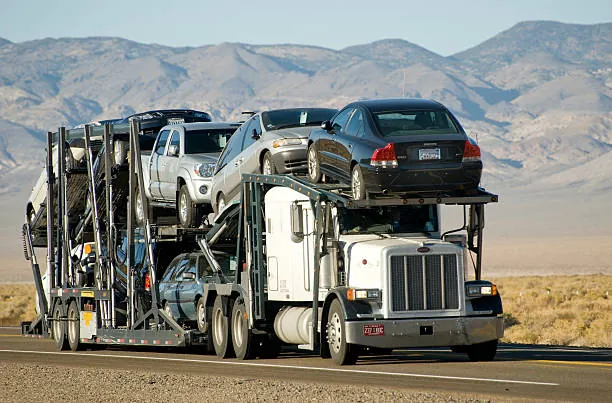
A standard open car carrier holds nine or ten vehicles, and the economics of the whole industry come from filling it. When you are shipping more than one car, you stop being one customer among nine and start being a meaningful share of the truck. That changes the price per vehicle, and it changes how quickly a carrier will accept the load.
It also simplifies everything else. One dispatch, one driver, one pickup, one delivery, one set of paperwork, and every vehicle arriving at the same time rather than trickling in over two weeks.
Why the per-vehicle rate falls
This is not a discount we are being generous with; it reflects the carrier's actual costs:
- One stop instead of several. The driver's scarcest resource is time, and a multi-car pickup at one address saves hours of routing.
- A guaranteed share of the trailer. A carrier who can fill half the truck in one booking will take a lower rate per unit to get it.
- Faster dispatch. Multi-car loads are attractive to carriers, so they tend to assign sooner than single vehicles on the same lane.
- Four or more vehicles is where the rate per unit usually drops noticeably. Below that the saving is real but smaller.
- A full nine or ten becomes effectively a dedicated truck, which is the cheapest per vehicle it is possible to move a car.
Who ships more than one vehicle
The common cases, each with its own wrinkle:
- Families relocating with two or three household vehicles. The simplest case, and usually one pickup and one delivery address.
- Collectors moving part of a collection, which normally means an enclosed multi-car trailer and a value conversation up front.
- Dealers moving inventory between lots or from auction, often on repeat lanes where a standing rate makes sense.
- Small fleets and rental operators repositioning vehicles seasonally.
- Corporate relocations covering several employees at once, billed to the employer.
- Estate and probate moves, where several vehicles leave one property together.
How mixed loads work
The vehicles do not have to be identical, but the mix affects the price:
- Vehicles are priced individually by size and weight, then the dispatch is priced as one load. A trailer full of compacts costs less than the same count of full-size SUVs.
- Height and length matter more than you would expect: two lifted trucks can occupy the space of three sedans.
- A non-running vehicle in the group needs a winch-equipped carrier for the whole load, so mention it at quote stage.
- Mixing open and enclosed means two dispatches. If one car in the group needs enclosed, it is usually cheaper to ship it separately than to put everything in a covered trailer.
- Different destinations are possible on one dispatch where they fall along the route, and we will tell you whether yours do.
Planning a multi-vehicle move
The logistics on your side are the part most worth thinking through early:
- Confirm loading space. Several vehicles plus a 75-foot carrier needs a wide street or, more often, a nearby commercial lot agreed in advance.
- Allow more time at both ends: loading three vehicles takes appreciably longer than loading one.
- Decide who receives the load. One person must inspect and sign for every vehicle, and each gets its own Bill of Lading.
- Give us every vehicle's year, make, model and condition at quote stage. A single surprise vehicle can change the trailer required for all of them.
- Book earlier than you would for one car. Matching a large block of trailer space to your dates takes more lead time.
Questions about multi-car transport
How many vehicles can go on one truck?
Nine or ten on a standard open carrier, and two to seven in an enclosed trailer. Fewer if the vehicles are large: two lifted pickups can take the space of three sedans, so the count depends on what you are shipping, not just how many.
Do all the vehicles have to go to the same address?
No. Multiple delivery addresses can work on one dispatch when they fall along the route. Destinations far off the line of travel are usually cheaper as separate bookings, and we will tell you honestly which of the two your situation is.
How much do I save?
The per-vehicle rate falls as the count rises, with a noticeable step at around four vehicles and the lowest per-unit cost on a full trailer. The saving comes from the carrier's real economics — one stop, a guaranteed share of the deck — so it varies by lane rather than being a fixed percentage.
Can I mix a running and a non-running vehicle?
Yes, but the whole load then needs a winch-equipped carrier, which narrows the pool of trucks and affects the rate for all of the vehicles. Tell us at quote stage rather than at pickup, or the load may be refused at the curb.
Related services
Open car transport
Dealer and auction transport
Corporate relocation car shipping
Enclosed car transport
Where we ship
This service runs on every lane we cover. These are the states and routes people ask about most:
Before you book
How much does it cost to ship a car?
The price is set by the lane, not by miles alone: distance, direction, season and how many trucks are already going your way.
What's included in a car shipping quote?
A useful quote states the price, the route, the vehicle, open or enclosed, and the pickup window it assumes.
Ready when you are
Send the route and we will price it properly.
A written quote, a vetted carrier and confirmed insurance. Nothing is charged until a driver is booked.