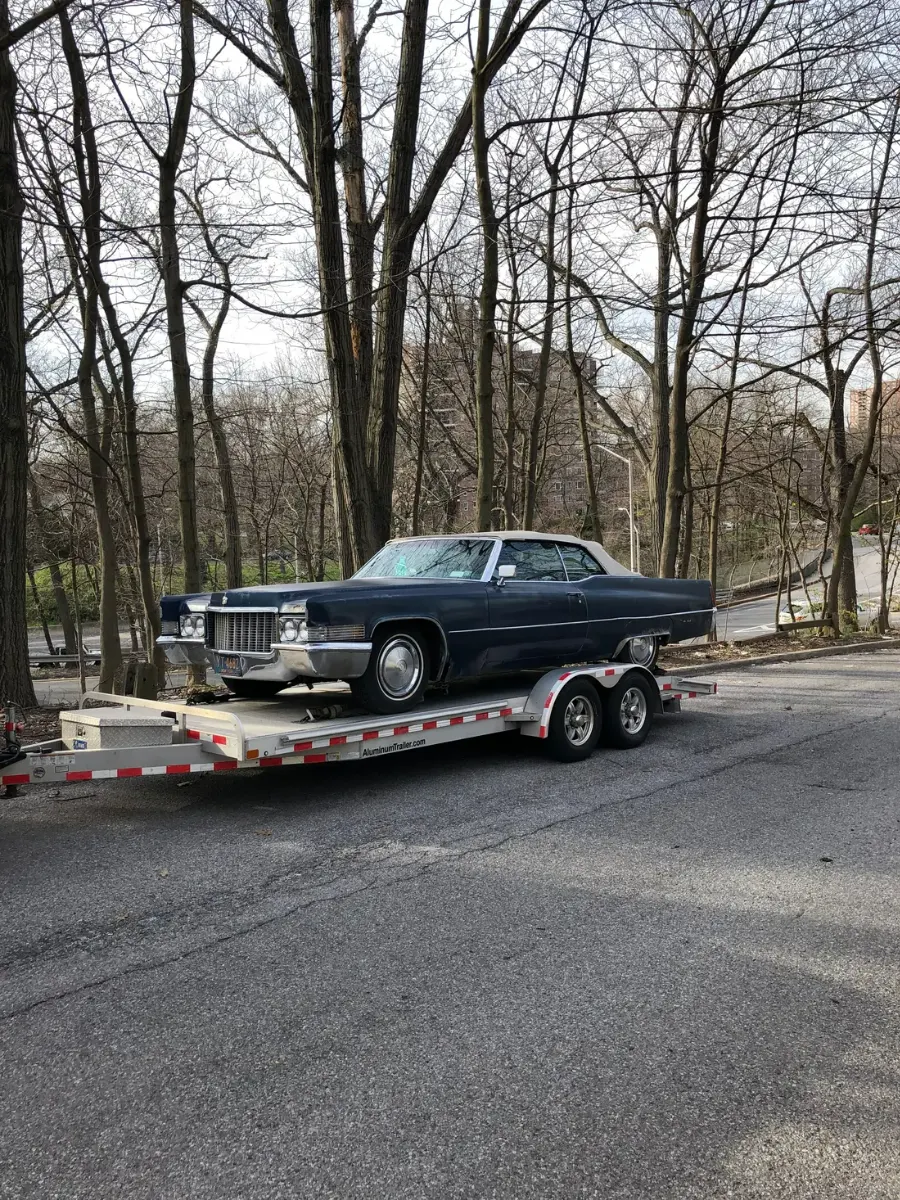
A classic presents a problem a modern exotic does not: it may technically run, but that is a long way from being something you want driven up a steel ramp by a stranger on a cold morning. Brakes that need a firm push, a clutch with an unusual bite, drum brakes that fade, a fuel system that floods when warm — the driver is meeting all of that for the first time, with your car, on a ramp.
That is why we default to lift-gate loading on these shipments even when the car technically does not need it, and why we treat weather sealing as a real consideration rather than a detail. Cars from the 1930s to the 1970s were not built to be watertight, and many are less watertight now than they were then.
Why enclosed is close to non-negotiable here
For most classics the open-versus-enclosed question answers itself:
- Weather sealing. Period door seals, window channels and convertible tops leak. Several hundred miles of highway spray finds every gap.
- Irreplaceable trim. Chrome, pot metal, period glass and original badges cannot be reordered, and a stone chip on any of them is permanent.
- Original paint. Single-stage paint with no clear coat marks far more easily than a modern finish and cannot be corrected the same way.
- Fresh restorations. New paint stays soft for weeks, and new chrome and rubber are vulnerable while everything settles.
- Value concentration. The car may be worth more than everything else on the trailer put together, which changes the insurance conversation.
Loading a car that does not drive like a modern one
Tell us which of these applies and the right equipment turns up the first time:
- Runs and drives normally — still worth a lift gate, but ramps are workable with an experienced driver.
- Runs, but not reliably — the most common case, and the one most worth a lift gate. Say so rather than hoping.
- Rolls and steers but does not start — winched onto the gate. Straightforward if the carrier knows in advance.
- Does not roll, steer or brake — needs specialist equipment and is quoted differently. See inoperable vehicle transport.
- Manual choke, crank start, or an unusual starting procedure — write it down and hand it to the driver with the keys.
- Drum brakes, no power steering and a heavy clutch are all worth mentioning. They change how the car behaves in the first ten feet.
Preparing a classic for several days in a trailer
Transit is usually a few days, and a car that sits happily in a garage does not always sit happily in a moving trailer:
- Fit a battery tender or disconnect the battery, and tell the driver which you have done.
- Check for fluid leaks and note them on the Bill of Lading before the driver does. Carriers can refuse a load that is dripping.
- Fuel to about a quarter tank. Older fuel systems vent more than modern ones, and less fuel means less weight and less smell in a sealed trailer.
- Secure or remove loose interior trim, hub caps, spare parts and anything that will migrate over several hundred miles of vibration.
- Close and latch the convertible top properly, and consider a soft cover if the top is fragile.
- Photograph everything, especially chrome and glass, dated and in good light, from every angle.
Insurance and paperwork for a car with no book value
The standard claims process assumes a vehicle with a market price you can look up. A classic does not have one, so establish the value before it moves, not after:
- Have a current agreed-value or appraised figure, and give it to us at quote stage.
- We match the carrier's cargo limit to that figure and send you the certificate before dispatch.
- Ask whether the cargo limit is per vehicle or per load, which matters a great deal on a shared enclosed trailer.
- Confirm with your own insurer that the agreed-value policy stays in force during transport. It normally does, as secondary coverage.
- Keep your appraisal, photographs and the signed Bill of Lading together. Those three documents are what a claim rests on.
Questions about classic and antique car transport
My classic runs. Do I still need a lift gate?
Not strictly, but we usually recommend it. Ramp loading depends on a driver who has never met your car judging its brakes, clutch and steering in the first ten feet. A lift gate removes that variable for a modest difference in cost, and on a car with no replacement that is usually the right trade.
Can a non-running classic be shipped?
Yes. What matters is whether it rolls, steers and brakes. A car that rolls and steers is winched onto the trailer routinely. One that does none of the three needs specialist equipment and is quoted differently, so tell us exactly which functions work.
How is a classic valued if something happens?
On the agreed or appraised value you provide before shipping, which is why we ask for it up front and match the carrier's cargo limit to it. Without a documented value beforehand, a claim on a car with no book price becomes an argument rather than a process.
Can I ship spare parts with the car?
Small parts in the trunk, within the carrier's roughly 100 lb allowance and agreed with the driver at pickup, are usually fine. They are not covered by cargo insurance. Anything substantial should ship separately, and loose items in the cabin will move and mark the interior.
Related services
Enclosed car transport
Luxury and exotic car transport
Inoperable vehicle transport
Insurance and claims
Where we ship
This service runs on every lane we cover. These are the states and routes people ask about most:
Before you book
Open vs. enclosed car shipping
Open transport is the standard, the most available and the cheapest. The car is exposed to weather and road spray, much as it would be if you drove it.
How to prepare your car for transport
Wash the car and photograph every side, the roof and the wheels, with the date visible.
Ready when you are
Send the route and we will price it properly.
A written quote, a vetted carrier and confirmed insurance. Nothing is charged until a driver is booked.